

I’m 42 years old, and sometimes I feel like I’m running out of time.
Not because I think 42 is old. But because there are things I expected to have accomplished by now that I’m still working toward.
Financial stability. Owning a home. Building a successful business. Being able to look at my life and feel like I’ve finally made it.
And when I look back at how long it took me to understand my ADHD, I can’t help wondering how different things might have been.
I don’t think I really started living until I was in my late 30s.
That’s a difficult thing to admit.
Because while I’m grateful that I have a better understanding of my ADHD, there’s another part of me that keeps thinking:
What about all those years before?
Why ADHD Can Make You Feel Behind in Life
If you have ADHD and feel behind in life, there may be a connection.
ADHD can make it harder to plan, follow through on goals, manage emotions, and make decisions. When those difficulties go unrecognized for years, they can affect your education, career, relationships, finances, and confidence.
And sometimes you don’t realize how much they’ve affected you until much later.
That’s been one of the hardest parts of understanding my ADHD as an adult.
I can look back at my life and recognize struggles that didn’t make sense to me at the time.
Things I blamed myself for.
Decisions I wish I’d made differently.
Opportunities I wonder whether I would have pursued if I’d understood myself better.
Of course, ADHD isn’t responsible for every difficulty in someone’s life. And plenty of people without ADHD feel behind, too.
But when you’ve spent decades struggling with something you didn’t even know you had, it’s difficult not to wonder how much it changed the direction of your life.
I Spent Years Just Trying to Get Through Life
When I think about my late teens, my 20s, and even my early 30s, I don’t remember feeling like I was building toward something.
I was surviving.
I was reacting to whatever life threw at me, trying to hold everything together without understanding why so many things felt difficult.
I struggled with my emotions, relationships, decisions, and confidence.
And for a long time, I didn’t know why.
I was also drinking heavily during those years.
I’ve described it as drinking an entire decade away.
Looking back, I recognize something I didn’t understand at the time.
Alcohol quieted my thoughts. It made me more comfortable socially. It gave me temporary relief without me even realizing that relief was what I was looking for.
I was depressed, too.
I can’t blame all of that on ADHD. Depression, drinking, and the circumstances of someone’s life are complicated.
But I do believe undiagnosed ADHD played a significant role in how difficult those years were for me.
And that’s something I’ve had to come to terms with.
Because those years are gone.
I can’t go back and explain ADHD to my younger self.
I can’t give him the understanding I have today.
I can only look back and wish someone had recognized what was happening.
Understanding My ADHD Helped Me. It Also Made Me Grieve.
One of the better things about understanding my ADHD and starting medication has been becoming more accepting of myself.
Not completely.
I still blame myself for things. I still get frustrated with my difficulties.
But I’ve become kinder to myself.
When something is difficult now, I have a better understanding of what might be contributing to it.
That doesn’t excuse every mistake or mean I don’t have things to work on.
It means I can look at myself with a little more empathy.
But there’s another side to finally having an explanation.
Once you understand why certain things were so difficult, you start wondering what your life might have looked like if you’d known sooner.
Would I have made different decisions?
Would my relationships have been different?
Would I have accomplished more?
Would I be further along in my career?
I can’t answer those questions.
And that’s part of what makes it so frustrating.
I finally have a better understanding of what I went through, but that understanding doesn’t give me those years back.
Apparently, I’m Not the Only One Who Feels This Way
Research suggests this mixture of emotions is common among adults who receive an ADHD diagnosis later in life.
A 2026 systematic review examining 21 studies found that receiving an adult ADHD diagnosis could lead to greater self-understanding and self-compassion, but also grief, anger, and confusion about the past.
In other words, you can be relieved to finally have an explanation and still be upset that it took so long to get one.
Both feelings can exist at the same time.
And understanding your ADHD doesn’t automatically mean you’ve made peace with everything that happened before.
Now I Feel Like I’m Racing Against Time
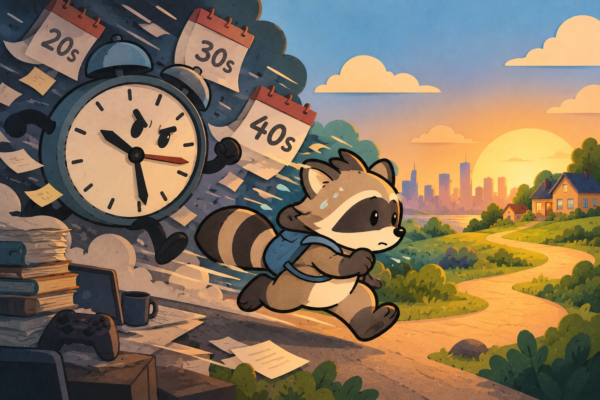
Here’s where things get especially frustrating for me.
Now that I understand my ADHD better, I feel like I have a better chance of accomplishing the things I want.
But I also feel like I’m starting late.
And that creates an enormous amount of pressure.
When something goes wrong, I don’t just get frustrated about the setback.
I think about the time I’m losing.
I don’t have time for this.
I can’t afford another setback.
I need to make up for lost time.
So I push myself harder.
I try to get past whatever happened as quickly as possible because I feel like I have years of catching up to do.
And it’s exhausting.
I know I can’t literally recover the years I’ve already lived.
But that doesn’t make the urge to catch up disappear.
Sometimes I wonder whether catching up is even possible.
That hasn’t stopped me from trying.
The American Dream Didn’t Help
I think a lot of millennials will understand this part.
When I was growing up, we were fed this idea that if you worked hard enough, you could have anything you wanted.
Work hard. Build a career. Buy a house. Become successful.
The American Dream.
BOYYY, was that a lie.
Because adulthood turned out to be a lot more complicated than that.
Hard work doesn’t guarantee financial security. Houses don’t cost what they used to. And people don’t all start with the same opportunities or face the same obstacles.
But even knowing all that, I still measure success against many of those milestones.
I want financial stability.
I want to own a home.
I want to build a successful business, including making ADHDefined into something meaningful and financially successful.
Those are real goals for me.
And until I accomplish them, part of me is going to feel like I’m behind.
I realize not everyone defines success that way.
But that’s how I currently see it.
I’m not going to pretend I’ve stopped caring about those things just because I understand my ADHD better.
Knowing Why You Struggled Doesn’t Erase the Frustration
Something I’ve learned is that understanding ADHD and accepting everything about your life are two different things.
I can recognize where ADHD may have affected my decisions.
I can feel compassion for the person I was.
And I can still be frustrated about where I am today.
In some ways, understanding my ADHD has made me more determined to overcome the difficulties I’ve identified.
Now I have a better idea of what I’m dealing with.
I want to do something about it.
But because I feel behind, I also want results quickly.
That’s the contradiction I’m still dealing with.
I understand myself better than I used to, and I’m kinder to myself than I was before.
But I’m also putting enormous pressure on myself to accomplish things I feel I should have accomplished years ago.
I haven’t figured out how to completely reconcile those two things.
What Can You Do If ADHD Has Left You Feeling Behind?
I wish I had a perfect answer.
I don’t.
I’m still working toward the things I want, and I still struggle with the feeling that I should be further along.
But if you’ve recently learned that you have ADHD and you’re looking back at your life with a lot of regret, here’s where I’d encourage you to start.
Figure Out Where ADHD Has Been Affecting Your Life
Before you decide you’ve failed at something, try to understand what made it difficult.
Think about the areas of your life where you’ve repeatedly struggled.
Maybe you’ve had trouble following through on goals.
Maybe you’ve struggled with relationships or made decisions you later regretted.
Maybe you’ve spent years calling yourself lazy because you couldn’t seem to do things that looked easy for everyone else.
Those difficulties don’t automatically mean ADHD was responsible.
But if you have ADHD, it’s worth examining whether symptoms played a role.
For example, difficulty planning and following through can be connected to something called executive dysfunction.
That’s when the mental skills involved in organizing, starting, and completing tasks don’t work as smoothly as you’d like.
I’ve written more about what that feels like in my article on executive dysfunction and ADHD.
The point isn’t to find an ADHD explanation for every mistake you’ve ever made.
It’s to understand your difficulties well enough to approach them differently.
Separate What Happened From What You Blame Yourself For
Here’s something worth trying.
Think of one area where you feel behind.
Maybe it’s your career, finances, education, or relationships.
Ask yourself three questions:
- What actually happened?
- Which difficulties might have been related to ADHD?
- What can I do differently now that I understand those difficulties better?
You might discover that some things were influenced by ADHD.
Other things may have involved circumstances you couldn’t control, decisions you made, or problems that had nothing to do with ADHD.
That’s okay.
The goal isn’t to excuse your entire past.
It’s to understand it more accurately.
You can’t change what happened, but you may be able to make better-informed decisions going forward.
Be Kind to Yourself
This is something I’m still learning.
When you’ve spent years being frustrated with yourself, you don’t suddenly stop because you receive a diagnosis.
You might still have regrets.
You might still feel disappointed about things you haven’t accomplished.
You might still feel like you’re running out of time.
I certainly do.
But try to remember that you were making decisions with the understanding and resources you had at the time.
That doesn’t mean every decision was good.
And it doesn’t mean you have to give up on the goals you haven’t reached.
It means you can acknowledge what went wrong without treating your entire past as evidence that you’ve failed.
I experienced some of these complicated emotions when I first started ADHD medication. I’ve written about that experience in what my first day on ADHD medication actually felt like.
Understanding yourself better doesn’t erase the past.
But it can change how you treat yourself when you think about it.
Get Support for the Difficulties You’re Still Facing
Learning about ADHD is a starting point.
If you’re still struggling with organization, follow-through, emotions, or the pressure you’re putting on yourself, consider discussing those difficulties with a qualified professional.
ADHD treatment may include medication, practical changes to your environment, and psychological support.
The NICE guidelines for adult ADHD recommend individualized treatment and describe when structured psychological interventions may be appropriate.
For adults who continue experiencing significant difficulties, ADHD-focused therapy, sometimes including cognitive behavioral therapy, may also help.
And if a late diagnosis has brought up years of grief or regret, that’s worth talking about, too.
You don’t need to have everything figured out before asking for help.
Am I Ever Going to Feel Caught Up?
I don’t know.
That’s probably not the answer someone wants to hear at the end of an article like this.
But it’s the answer I have.
I’m still trying to build the life I want.
I’m still working toward financial stability, owning a home, and building something successful.
I still get frustrated when things don’t go according to plan.
And I still wonder how different my life might have been if someone had explained ADHD to me when I was younger.
But I have a better understanding of my ADHD now.
I’m more aware of the difficulties I struggle with.
And even though I’m not always good at it, I’m learning to be kinder to myself.
I can’t tell you whether I’ll ever reach the point where I feel completely caught up.
What I can tell you is what I’d tell someone else who spent years struggling without understanding why:
Figure out where ADHD has affected your life. Learn what you can do about it. And be kind to yourself along the way.
I’m trying to do the same.