
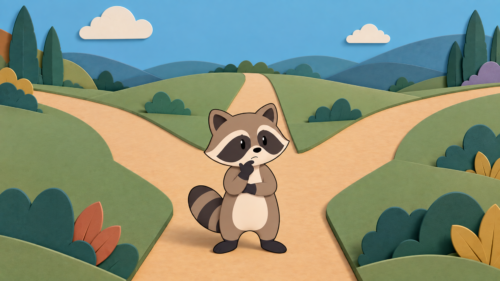
Sometimes I don’t need more options.
I need somebody to tell me what the hell I’m supposed to do.
Give me a few things to do at work without telling me which one comes first, and I can spend way too much time trying to figure out where to start.
Which one makes the most sense?
Which one is more important?
Should I do this one first?
Actually, maybe I should do that one.
Eventually I’ll pick something. Sometimes it’s the one that makes the most sense. Sometimes I basically just pick one because I need to get out of that feeling of uncertainty.
And then I might start doing it and think:
Shit. I should probably be doing the other thing.
But if my boss tells me, “Do this first, then do that”?
Perfect.
Unless there’s something obviously wrong with the plan, I have no business litigating with my boss. I’ll do it his way.
The decision has been made.
I can just do the thing.
Even Picking Where to Eat Can Turn Into a Whole Thing
You would think choosing where to eat would be easy.
There isn’t really a wrong answer.
You’re going to eat either way.
Slow your brakes, buckaroo.
There is definitely a wrong answer.
What if I pick Fast Food X and it sucks?
Now I’m sitting there eating disappointing fries thinking I should’ve gone to Fast Food Y.
Maybe Y was the one I actually wanted.
Except apparently it wasn’t, because if I really wanted it that badly, why didn’t I just pick it?
This can go on long enough that sometimes the solution becomes:
I just won’t eat.
Not because I decided I wasn’t hungry.
I couldn’t decide where to go.
The More a Decision Matters, the Worse This Gets
Buying something is where I can really get stuck.
I research the hell out of things.
Reviews. Comparisons. Forums. Reddit. Whatever information I can find.
Eventually I can usually narrow everything down to two or three choices.
You’d think that would solve the problem.
Sometimes two choices are still too many.
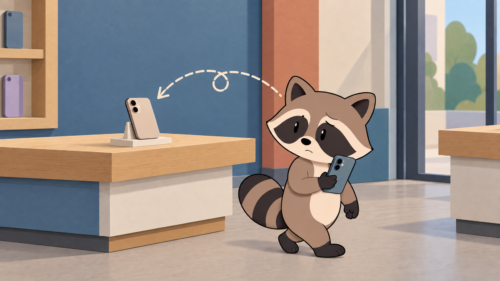
Imagine I’m trying to choose between the regular iPhone 18 and the completely hypothetical iPhone 18 THICK PLUS.
What if I buy the Thick Plus and it’s too thick?
What if it’s uncomfortable to hold?
Okay, but what if I get the regular 18 and it’s too small?
What if I would’ve liked the bigger one?
Just writing those hypothetical questions makes me feel a little nauseous.
Eventually I get exhausted looking at both of them.
Shit. I have to make a choice.
Pull the trigger.
Face the consequences later.
Except apparently I don’t believe decisions are supposed to end there.
I Can Make the Decision and Then Reopen the Case
Let’s say I bought the Thick Plus.
I don’t necessarily stop researching.
I’ll go back and look at the other phone.
I’ll compare its features with mine.
I’ll read forums to see what people who bought the other one are saying.
If I find enough evidence that convinces me I actually made the wrong choice, I’ll return mine and get the other one.
If there isn’t enough evidence?
I’ll keep what I have.
The weird part is that I don’t even need to be unhappy with my choice for this to happen.
I could be completely fine with it.
Then somebody says the other model is better.
Case reopened.
And this isn’t just something I do when I’m buying stuff.
At the gym:
Which exercise should I do?
Am I doing this workout right?
Should I do cardio or should I go home?
Driving somewhere:
Was this the best route?
Working on this website:
Was that actually the right change?
I’ve gone back and edited some of these articles at least five times.
I second-guess myself in pretty much everything.
Even When There’s “No Right Answer,” I Think There Is
This is probably the hardest part for me to explain.
You can tell me:
“Both choices are fine.”
I understand what you’re saying.
I just don’t completely believe you.
Take this website.
Maybe there are three perfectly reasonable ways I could structure an article. Nobody can tell me that one is objectively correct.
Okay.
But one of those pages might eventually perform better.
One might rank higher.
One might keep people reading longer.
One might explain the idea better.
So somewhere out there is a better outcome.
I just don’t know which decision gets me there.
That’s the part that gets me stuck.
A lot of what I’m describing gets called ADHD analysis paralysis, decision paralysis or choice paralysis online. These aren’t medical diagnoses. They’re terms people use for experiences like getting stuck in indecision, feeling overwhelmed by choices or overthinking what to do next.
And researching this made me realize that I’ve probably been bundling several different things together whenever I call all of this “decision fatigue.”
What ADHD Research Actually Says About Decision-Making
There is research showing differences in decision-making among adults with ADHD.
A meta-analysis examining decision-making in adults with ADHD found small-to-medium differences between ADHD and comparison groups.
Decision-making can also ask a lot of the same mental processes that can be difficult with ADHD: holding information in mind, comparing options, planning what happens next and eventually acting on a choice.
A large meta-analysis of executive function research found group-level differences across several areas, with some of the strongest and most consistent differences involving working memory, planning, response inhibition and vigilance.
But there’s an important catch.
Those executive-function difficulties aren’t universal among people with ADHD. The researchers concluded that executive-function weaknesses appear to be one important part of ADHD, but aren’t enough to explain every case.
So the research gives me some context for why complicated decisions might demand a lot from me.
It doesn’t prove that ADHD is responsible every time I spend 45 minutes comparing two phones.
Apparently There’s a Name for Always Looking for the Best Option
While researching this, I came across the idea of maximizing.
A maximizer tries to find the best available choice rather than simply finding one that’s good enough.
That hit a little close to home.
A 2025 study using real-world online shopping behavior found that stronger maximizers were more likely to abandon decisions before choosing, keep thinking about alternatives after choosing, reverse decisions and consider even more alternatives when deciding again.
Hello.
But this is where I need to draw a line.
That research does not establish maximizing as an ADHD trait.
I couldn’t find good evidence showing that ADHD is why I do this.
It’s a decision-making concept that happens to sound remarkably similar to part of my experience.
That’s important because it’s really easy to find something you do, discover that other people with ADHD do it too, and turn that into:
“ADHD brains do this.”
The evidence doesn’t always go that far.
Sometimes Not Choosing Feels Better Than Choosing Wrong
Researchers also use the term decision avoidance for ways people can get out of effortful decision-making, including postponing, bypassing or handing a decision to somebody else.
Researchers have looked at whether avoiding decisions can reduce regret by reducing responsibility for a potentially bad outcome.
The evidence isn’t simple.
A 2023 meta-analysis found that maintaining the status quo reliably reduced regret, but the evidence wasn’t clear for the other decision-avoidance strategies they examined.
For me, the recognizable part is simpler:
Sometimes I’d genuinely rather not do something than choose and discover afterward that I chose wrong.
And when somebody I trust makes the decision for me?
That can feel like an enormous weight disappearing.
Give me a workout:
Bench.
Rows.
Shoulder press.
Curls.
Twenty minutes of cardio.
Go home.
Beautiful.
I don’t have to stand in the gym negotiating with myself about what exercise I should be doing.
Someone already built the plan.
I just have to execute it.
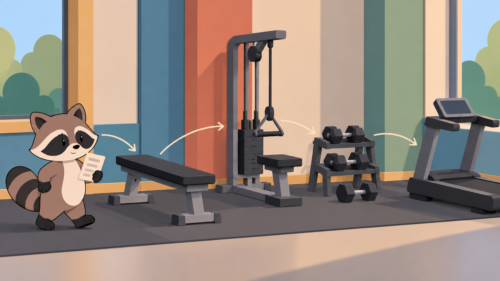
Unfortunately, life doesn’t come with somebody standing next to me holding a clipboard.
And Then There’s Actual Decision Fatigue
There is one part of this that feels different.
The longer I’m at work, the harder making decisions seems to get.
By that point:
I’m tired, Grandpa.
And if I’ve already spent the day thinking, choosing, working and dealing with everything else, somebody asking me to make another decision can genuinely irritate me.
Damn. Just pick something.
That’s closer to what researchers mean by decision fatigue: a tendency toward less effortful decisions as the cumulative mental burden of effortful decision-making increases.
But even that concept isn’t as settled as I assumed.
A 2025 systematic review of decision fatigue in healthcare professionals found evidence supporting decision-fatigue effects in 45% of the cases that quantitatively tested for them. The researchers also found inconsistent definitions and problems with how decision fatigue has been measured.
And that research was specifically about healthcare professionals making medical decisions. It doesn’t establish decision fatigue as an ADHD-specific problem.
So I don’t think it’s accurate to take everything I’ve described here and call it:
“ADHD decision fatigue.”
Some of it may be fatigue.
Some may involve the cognitive demands of making decisions.
Some looks a lot like maximizing.
Some looks like decision avoidance.
Some overlaps with the perfectionism and second-guessing I’ve already written about.
And some of it may simply be me.
Knowing This Hasn’t Magically Made Me Decisive
I wish this article ended with the system I developed that fixed everything.
I don’t have one.
I still do this shit constantly.
I still research things way longer than they probably deserve.
I still second-guess decisions I’ve already made.
I can still receive one new piece of information and reopen a case I thought was closed.
And I still find it much easier when somebody I trust gives me a reasonable plan and I can just follow it.
For a long time, I didn’t even think there was anything to explain.
I figured everybody was doing the same thing.
Maybe some people are.
But apparently not everybody needs to conduct a small appellate hearing every time they have to pick where to eat.
And now I at least understand something I didn’t before:
Sometimes the exhausting part isn’t doing the thing.
It’s having to decide which thing is the right thing to do.