

I liked being under the influence.
That’s uncomfortable to admit, but I liked what happened to my mind when I drank. The noise got quieter. I talked more freely. I worried less about whether somebody would think I sounded dumb or criticize what I said.
I didn’t notice all of this in one big moment. Over time, I realized I wasn’t watching myself so closely when I drank. I stopped masking as much.
That felt like relief. The next morning often felt very different.
Why might alcohol feel appealing when you have ADHD?
There isn’t one answer that explains everyone’s drinking. ADHD is associated with a higher risk of alcohol use disorder, but that doesn’t mean ADHD causes every drinking problem or that everyone with ADHD drinks for the same reason. Impulsivity, stress, other mental health conditions, genetics, and someone’s environment can all matter. The National Institute on Alcohol Abuse and Alcoholism (NIAAA) discusses the connection.
For me, drinking quieted the constant second-guessing. I could have a conversation without that voice in my head saying, “If you say anything dumb, people are going to criticize you.”
That’s my experience. It doesn’t mean alcohol treats ADHD. It means I understand why I kept wanting that feeling.
Alcohol may seem to help in the moment because it changes how you feel. It can also impair judgment and attention, and NIAAA notes that alcohol can worsen ADHD symptoms. Feeling calmer after a drink doesn’t tell us that alcohol is helping ADHD overall.
What does dopamine have to do with it?
Alcohol affects several brain systems. One involves dopamine, which helps the brain learn that drinking can feel rewarding and remember the people, places, and situations associated with it. Alcohol can also temporarily reduce uncomfortable feelings. NIAAA explains both effects.
I can’t tell you dopamine is why my mind got quieter. And “people with ADHD drink because their brains need dopamine” is too simple an explanation for something this complicated. What I can say is that the relief I felt made drinking appealing to me.
The part that came the next day
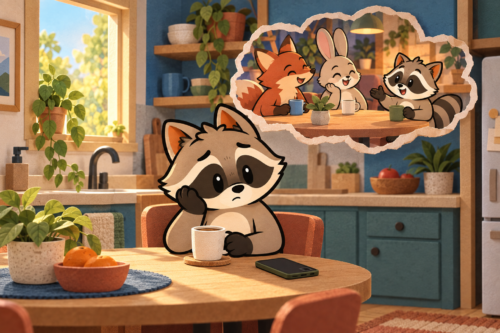
When I drank, I worried less about how I came across. Sometimes that meant I said things I shouldn’t have.
The next day I’d remember something I actually said and cringe. I’d wonder if I had been annoying or come across like a jerk. The shame wasn’t always me imagining a problem. Sometimes I had to own what I’d done.
It was a strange trade: a few hours without so much self-monitoring, followed by a day of replaying what happened.
And once I’d had one or two drinks, stopping could be hard. Feeling loose made it easier to want another. I still have to pay attention to that, even now that I’m medicated.
What changed after I started ADHD medication
The first time I took ADHD medication, I experienced a kind of quiet I hadn’t realized was possible. That gave me a reference point. I started to recognize that I may have been reaching for something similar when I drank, without consciously thinking about it that way.
Medication wasn’t the sole reason my relationship with alcohol changed. Understanding my ADHD changed how I thought about drinking, too. When my mind was quieter, I didn’t feel the same need to drink as much, or sometimes at all.
Before that, almost any occasion could feel like an occasion to drink. Now I’m more likely to ask myself whether I actually want to. Alcohol being there doesn’t mean I have to have it.
At first, I avoided drinking. Later I learned to be more deliberate about when I drink and how much. I’m also somewhat better at noticing when I’m saying or doing something I’ll regret. I’m not claiming I’ve mastered it.
I don’t want anyone to read my experience as a promise that ADHD medication will solve a drinking problem. When ADHD and alcohol use disorder occur together, each may need attention and treatment of its own. NIAAA describes why treating another mental health condition alone generally does not resolve alcohol use disorder.
If you take ADHD medication and drink alcohol, ask your prescriber or pharmacist about your specific medication. Interactions differ by drug. NIAAA lists possible interactions for several ADHD medications.
If drinking has started to worry you
Having ADHD doesn’t mean you have an alcohol use disorder. Having trouble stopping, repeatedly regretting what happened when you drank, or feeling like you need alcohol to cope are still good reasons to talk with a healthcare professional. You don’t have to decide on a diagnosis before you ask for help. NIAAA explains the signs of alcohol use disorder and available treatments.
I’m still learning what drinking did for me and when the cost stopped being worth the relief. The question I ask myself now is simple: do I actually want a drink, or do I want my mind to be quiet?