
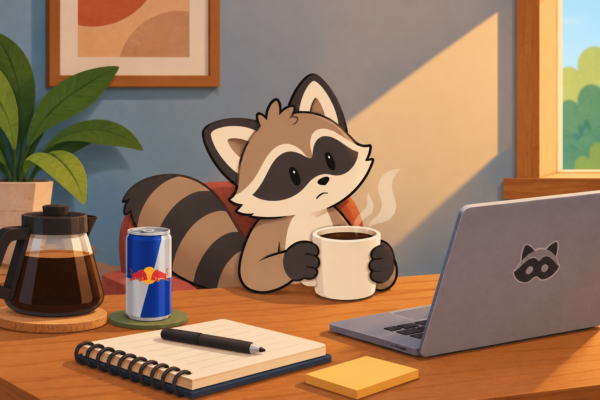
I… love… caffeine.
Coffee? Absolutely.
Red Bull? Yes, please.
But let’s get something straight.
When I say coffee, I mean actual coffee. Hot coffee.
Don’t give me none of those cold coffee brew things. Those aren’t coffees. Those are desserts dressed as a pick-me-up.
Anyway.
I’ve always felt like caffeine helps me concentrate. Sometimes it even makes getting started on something easier.
And here’s something else.
I can drink a Red Bull and still fall asleep when I’m ready.
So when I started learning about ADHD, I began wondering whether my relationship with caffeine had something to do with it.
Does caffeine actually help people with ADHD focus? Why do some people say it makes them calmer? And why can some of us drink coffee without feeling particularly wired?
Turns out, the answers aren’t quite as simple as the internet makes them sound.
Does Caffeine Actually Help ADHD?
Yes, caffeine can help with attention and alertness. But there’s not enough evidence to say it’s an effective treatment for ADHD.
That’s the important distinction.
Caffeine is a stimulant. That means it can make you feel more awake and alert.
And research supports that.
Studies have found that caffeine can help people respond faster and make fewer mistakes on certain attention-related tasks.
But here’s the thing.
People without ADHD can experience those benefits too.
When researchers have studied caffeine specifically as an ADHD treatment, the results haven’t been particularly convincing.
A 2023 review of studies involving children with ADHD found that caffeine didn’t significantly improve ADHD symptoms overall compared with a placebo.
A placebo is something that looks like a treatment but doesn’t contain the active ingredient being tested.
Scientists also haven’t studied caffeine and adult ADHD enough to know how much it might help.
So caffeine might help you feel more focused, but that doesn’t mean it’s treating your ADHD.
And that’s something worth keeping in mind when I look at my own experience.
I know caffeine helps me concentrate.
But how much of that is related to ADHD?
How much is simply what caffeine does?
And how much comes from drinking it regularly?
Those are different questions.
What Caffeine Actually Does for Me
I usually drink one Red Bull a day.
Most of the time, it’s a 12-ounce can.
If I find the smaller 8.4-ounce cans on sale at Sam’s Club, I’ll grab those instead.
And if the day allows it, I’ll have a regular cup of hot coffee too.
I enjoy the taste of coffee, but I also enjoy the ritual of drinking it.
With Red Bull, it’s a little different.
Sometimes I’ll drink one before working out because I feel like it helps me concentrate on my workout.
Other times, I’ll have one in the middle of the day to give me a boost for the rest of it.
But the biggest thing I’ve noticed is how caffeine affects my ability to focus.
My mind feels quieter.
Not necessarily because every thought disappears.
It’s more like I was missing something.
And once I have my caffeine?
Okay. We’re good now. Let’s go.
It feels easier to start something.
It feels easier to concentrate.
And there’s something relaxing about finally feeling ready.
What’s interesting is that I noticed these effects before I knew I had ADHD.
I just never put two and two together.
I assumed everyone experienced caffeine that way.
If you’ve ever known exactly what you needed to do but couldn’t seem to get started, I explain that experience in my article about executive dysfunction and ADHD.
Why Does Caffeine Make Some People With ADHD Feel Calm?
You’ve probably heard someone say that coffee makes people with ADHD calm instead of energetic.
Maybe you’ve experienced something similar.
But does having ADHD mean caffeine works backward?
No. Having ADHD doesn’t automatically mean caffeine will make you feel calm instead of awake.
Caffeine still works as a stimulant.
One of the main things it does is block a chemical in your brain called adenosine.
Adenosine helps your body recognize when it’s getting tired.
Caffeine temporarily blocks some of those sleepy signals, which can make you feel more awake.
But feeling awake doesn’t necessarily mean feeling hyper.
Think about trying to finish something while your attention keeps drifting somewhere else.
You sit down to do one thing, but your mind keeps jumping to something completely different.
Now imagine having a little more control over where your attention goes.
That might feel calming.
Not because caffeine is putting you to sleep, but because concentrating doesn’t feel quite as difficult.
That’s one possible reason some people describe caffeine as relaxing.
For me, the relaxing part is that feeling of being ready.
It’s not that caffeine suddenly makes everything peaceful.
It’s that I feel like I can get going.
There’s a difference.
Why Can I Drink Coffee and Still Fall Asleep?
Here’s something else about my relationship with caffeine.
I can drink it and still fall asleep when I’m ready.
But I want to make something clear.
Caffeine doesn’t make me sleepy.
It’s not like I drink a Red Bull and suddenly need a nap.
It’s not sleepy juice.
It just doesn’t seem to prevent me from sleeping when I’m ready.
And there’s a popular claim online that if you can drink coffee and fall asleep, you probably have ADHD.
That’s not true.
Being able to sleep after drinking caffeine isn’t a sign that someone has ADHD.
Some people are more sensitive to caffeine than others.
Some drink it regularly and become used to its effects.
And the amount you drink and when you drink it can make a difference.
But here’s something interesting.
Just because you can fall asleep after drinking coffee doesn’t mean the caffeine isn’t affecting your sleep.
Researchers have found that caffeine can reduce how long you sleep and how much deep sleep you get.
In a 2023 review of caffeine and sleep studies, people slept about 45 minutes less on average under the conditions researchers examined.
That doesn’t mean everyone who drinks coffee loses 45 minutes of sleep.
But it does mean you might fall asleep without much trouble and still not get the same quality of sleep.
So while caffeine doesn’t seem to stop me from falling asleep, I can’t say for certain that it has no effect on my sleep.
And if you’re regularly feeling tired despite spending enough time in bed, it’s something worth paying attention to.
Am I Just Used to Caffeine?
Here’s something else about my daily caffeine habit.
When I don’t have it, I feel sluggish.
It’s almost like something is missing.
And once I finally have my coffee or Red Bull, that feeling goes away.
I used to assume everyone experienced that same feeling.
But there’s another possible explanation.
If you drink caffeine every day, your body can get used to it.
And when you go without it, you might feel the difference.
You could get a headache.
Feel unusually tired.
Become irritable.
Or find it harder to concentrate.
Those are common symptoms of caffeine withdrawal.
And some of them can look a lot like difficulties people with ADHD already experience.
For example, if you already struggle to concentrate, feeling tired because you skipped your usual coffee might make focusing even harder.
That doesn’t necessarily mean your ADHD suddenly got worse.
It might simply mean your body is accustomed to caffeine.
Or maybe you’re missing a routine you enjoy.
I haven’t deliberately tried cutting caffeine out completely.
Why?
Because I don’t see the point.
I enjoy it.
But I also recognize that the feeling of something being missing doesn’t automatically mean my ADHD is demanding caffeine.
It could be the caffeine itself, the routine, or a combination of both.
Can You Drink Caffeine While Taking ADHD Medication?
I’ve heard people say you shouldn’t drink caffeine while taking ADHD medication.
But I do drink caffeine.
And when I have it while taking my medication, I notice an extra boost.
Personally, I haven’t experienced any obvious adverse reactions.
But there is something important to understand.
Caffeine and certain ADHD medications can increase each other’s stimulating effects.
Many ADHD medications are stimulants, just like caffeine.
Taking them together may make you feel more alert, but it can also increase the chance of:
- A faster heart rate
- Higher blood pressure
- Feeling jittery or anxious
- Heart palpitations
- Trouble sleeping
Not every ADHD medication is a stimulant, though.
Some work differently, so the potential risks depend on what you’re taking.
That’s why it’s worth asking your prescriber whether your usual caffeine intake is appropriate with your medication.
You don’t necessarily have to give up coffee.
But you should know how the combination might affect you.
And if you’re noticing a racing heart, unusual anxiety, or trouble sleeping, bring it up with your healthcare professional.
If you’re curious about how medication affected me when I first started taking it, I wrote about my first day on ADHD medication.
How Much Caffeine Is Too Much?
Since we’re talking about caffeine, it’s worth knowing how much you’re actually drinking.
Here’s approximately how much caffeine is in my usual drinks.
| Drink | Approximate caffeine |
|---|---|
| Red Bull, 8.4 oz | 80 mg |
| Red Bull, 12 oz | 114 mg |
| Regular brewed coffee, 8 oz | 95 mg |
| 12 oz Red Bull + 8 oz coffee | 209 mg |
Coffee can vary quite a bit depending on how it’s prepared and how large the serving is.
According to the FDA’s guidance on caffeine, up to 400 milligrams per day is generally not associated with negative effects for most healthy adults.
But that isn’t a target to aim for.
Some people experience unpleasant effects at much lower amounts.
And certain medications or medical conditions can change how much caffeine is appropriate.
So instead of seeing how much you can handle, pay attention to how caffeine affects you.
Especially if you’re taking ADHD medication.
What Should You Do If Caffeine Helps You Focus?
If caffeine helps you concentrate, you don’t necessarily have to stop drinking it.
But it might help to understand exactly what it’s doing for you.
Notice What Caffeine Actually Helps With
Does it make you feel more awake?
Does it make starting something easier?
Or does it help you stay focused once you’ve started?
Those aren’t necessarily the same thing.
You can feel completely awake and still struggle to start something.
And you can start something but have trouble sticking with it.
Paying attention to what changes after caffeine can help you understand your own experience.
If getting started is your biggest struggle, you might also recognize the feeling I describe in my article about ADHD paralysis.
Pay Attention to Your Sleep
Even if caffeine doesn’t stop you from falling asleep, it could still affect your sleep.
If you’re regularly tired despite getting enough hours in bed, try having your last caffeinated drink earlier in the day and see whether anything changes.
Know How Much You’re Drinking
A small coffee and a large coffee can contain very different amounts of caffeine.
Energy drinks vary too.
Check the label when possible.
And remember that caffeine can also come from tea, soda, and some supplements.
Talk to Your Prescriber If You Take ADHD Medication
If you’re taking ADHD medication, ask whether your caffeine intake is appropriate.
That doesn’t automatically mean you’ll need to stop drinking coffee.
It just means you can make a more informed decision.
And if you’re struggling with ADHD symptoms despite relying on caffeine to get through the day, it’s worth discussing treatment options rather than assuming more caffeine is the answer.
What I’ve Learned About ADHD and Caffeine
I still love caffeine.
I love a good cup of hot coffee.
I enjoy the ritual.
And I like having a Red Bull before a workout or during the afternoon when I need another push.
I genuinely feel like caffeine helps me concentrate and makes getting started a little easier.
I noticed those effects long before I knew I had ADHD.
But learning more about ADHD has helped me understand that my experience isn’t necessarily everyone’s experience.
Some people feel more alert after caffeine.
Some feel jittery.
Some describe feeling calmer.
And some, like me, can drink it and still fall asleep when they’re ready.
None of those reactions proves someone has ADHD.
And caffeine helping you focus doesn’t automatically mean it’s treating ADHD.
I’m not planning to give up caffeine just because I’ve learned more about it.
But I do think it’s worth understanding how it affects you, especially if you’re taking ADHD medication.
As for me?
I’ll continue enjoying my hot coffee.
And when I get that familiar feeling that I’m ready to get things done, I know exactly what it feels like.
Okay. We’re good now. Let’s go.
Frequently Asked Questions About ADHD and Coffee
Does caffeine make people with ADHD sleepy?
Some people with ADHD say they feel sleepy after drinking caffeine, but that doesn’t happen to everyone. Caffeine usually makes people more alert. Feeling tired afterward can have several explanations, and it doesn’t mean you have ADHD.
Can coffee make ADHD symptoms worse?
It can make things harder for some people. Too much caffeine may increase anxiety, make you feel restless, or interfere with sleep. And when you don’t sleep well, concentrating and managing ADHD symptoms can become more difficult.
Can people with ADHD drink coffee?
Yes. Having ADHD doesn’t automatically mean you need to avoid coffee. What’s important is how much you’re drinking, how it affects you, and whether you’re taking medication that could interact with caffeine.
Is caffeine a substitute for ADHD medication?
No. Caffeine can help with alertness and certain attention tasks, but it hasn’t been proven to work as an effective replacement for ADHD medication or other recommended treatments.