
I had an entire week to return something to Amazon.
They had sent me the wrong item, replaced it, and asked me to return the original one. Today, I noticed they had deducted the money from my bank account because I never returned it.
Why did I wait so long?
I was disappointed about losing the money, but I was also disappointed in myself.
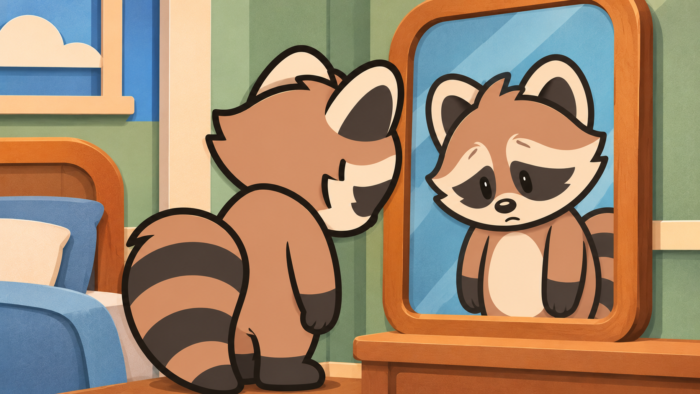
“I’m a failure of a human being.”
ADHD can contribute to low self-esteem, and for me, this is what it looks like. Something as simple as forgetting to return a package affects how I feel about myself as a person.
Why Does ADHD Affect Self-Esteem?
A 2024 systematic review of 11 studies found a strong association between ADHD and low self-esteem in adults.
Think about the things someone with ADHD might experience regularly. Forgetting responsibilities, struggling to complete seemingly simple tasks, saying things impulsively, and having difficulty regulating emotions.
Now imagine experiencing those things for years without understanding why.
Before my diagnosis, I called myself lazy, immature, and dumb. I would get mad at myself for not being able to “just try harder.”
Even now, when I think about the things I dislike about myself, a lot of them are related to my ADHD.
Growing Up With Undiagnosed ADHD
I learned pretty fast as a child that I wasn’t shit. Or at least that’s what I thought.
I remember being compared to my cousin. Why couldn’t I have the same penmanship as him? Why weren’t my grades higher? Why did I write like I was writing with my foot?
To this day, that still irritates me.
I was criticized for being forgetful, and by the time I was a teenager, I already felt like I wasn’t enough.
Nobody knew I had ADHD, including me.
When a child repeatedly struggles to meet expectations and doesn’t understand why, those experiences can influence how they see themselves well into adulthood.
Why My Mistakes Outweigh My Accomplishments

Accomplishments don’t do much for my self-esteem.
When someone recognizes me for doing something well, my reaction is usually, “Thanks for the appreciation. Let’s move on.”
It’s a drop in the bucket.
I don’t give my accomplishments anywhere near the same weight as the things that make me feel like a failure.
What’s interesting is that I haven’t lost confidence in my ability to handle everyday responsibilities. Even after that Amazon incident, I still trust myself to handle them.
I just don’t particularly like who I am.
You can be confident in your abilities and still have low self-esteem. Being good at something doesn’t necessarily mean you feel good about yourself.
When Being Yourself Feels Like a Risk
I’ve had instances where I thought someone and I were practically best friends, only to realize that feeling wasn’t mutual.
It’s embarrassing. I feel like I want to crawl into a hole.
I start wondering what I did wrong. Was I annoying? Did I say too much? Do people just tolerate me?
Sometimes, I genuinely feel like nobody likes me.
I don’t know what everyone actually thinks of me, but that’s where my mind goes.
I’ve learned to hold back my enthusiasm because people seem to look at me weird when I get overly excited. I also try not to express my opinions as much.
Who the fuck wants to hear me, right?
Before medication, it was much harder to control what I said and when to stop talking. Medication has helped me with that tremendously.
But holding back because I’m being impulsive and holding back because I don’t think anyone wants to hear from me are two very different things.
The latter is part of why I struggle with ADHD masking.
Why I Feel Like I Have to Earn My Worth
If I’m not useful, I’m nothing.
That’s how I feel.
As a man, I also feel there’s an expectation to provide and be useful. For me, that adds another layer to how I measure my worth.
I used to go further out of my way for people than I do now. These days, I think the amount I do for others is reasonable.
But I still struggle with the idea that simply being myself is enough.
Did Getting Diagnosed With ADHD Improve My Self-Esteem?
It did, to some extent.
Being diagnosed helped me tremendously in understanding why certain things happen. It’s also become a little easier to forgive myself for past mistakes.
I still look back on some of them and cringe, though.
When I catch myself doing something that makes me cringe now, my self-esteem drops again.
Getting diagnosed as an adult means finally having an explanation for things you’ve spent years criticizing yourself for. It doesn’t necessarily mean you’re going to stop criticizing yourself overnight.
How to Improve Self-Esteem With ADHD
Everyone is different. For me, understanding ADHD and taking medication have helped more than anything else.
Therapy helps me while I’m in therapy, but it feels like all of that goes out the window once I leave the office.
That doesn’t mean therapy won’t work for someone else. A 2023 review of 28 studies found that cognitive behavioral therapy (CBT) can help improve self-esteem in adults with ADHD.
If you’re struggling with low self-esteem, these are some things worth working on:
- Understand what you’re actually struggling with. Learning about executive dysfunction might help explain why you keep putting something off despite knowing it needs to get done.
- Be specific about your mistakes. “I forgot to return a package” is an accurate description of what happened. “I’m a failure of a human being” isn’t.
- Stop leaving your accomplishments out of the equation. If you’re judging yourself based on everything you’ve done wrong, what about everything you’ve done right?
- Make therapy practical. If you struggle to apply what you discuss during appointments, tell your therapist. Ask about concrete exercises you can use when you’re criticizing yourself outside the office.
- Get help with your ADHD symptoms. If you’re constantly dealing with difficulties that contribute to poor self-esteem, addressing those difficulties through appropriate ADHD treatment may help.
If feelings of worthlessness are persistent, it’s also worth discussing them with a mental health professional. ADHD isn’t the only possible contributor to low self-esteem.
I’m still working on some of these things myself.
What I Would Tell My Younger Self
If I could go back and talk to myself as a child, I would tell him he has ADHD. I would explain what it is and how it can manifest in everyday life.
I would also explain that his parents were doing the best they could with what they had. They didn’t understand their own traumas. How were they supposed to understand something none of us knew I had?
I wish I had learned about ADHD before spending so many years thinking I simply wasn’t good enough.
I’m glad I understand it now, even if I still struggle with how I feel about myself.
And maybe, eventually, a forgotten Amazon return can just be a forgotten Amazon return.
References
- Pedersen et al. (2024). Self-Esteem in Adults With ADHD Using the Rosenberg Self-Esteem Scale: A Systematic Review. Journal of Attention Disorders.
- (2023). Effectiveness of cognitive behavioural-based interventions for adults with attention-deficit/hyperactivity disorder extends beyond core symptoms: A meta-analysis of randomized controlled trials.