
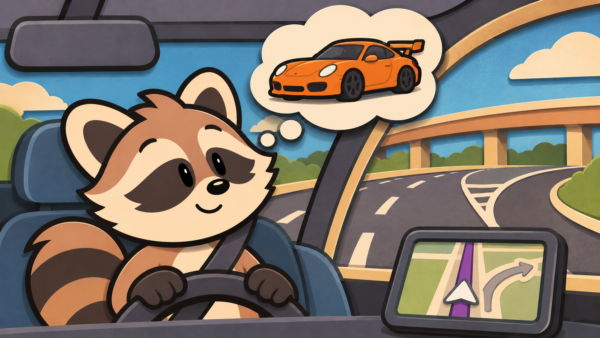
I actually enjoy driving.
Long-distance trips? No problem. I don’t mind them at all. I’m also someone people trust behind the wheel.
But having ADHD means my attention doesn’t always cooperate.
I’ve arrived somewhere and thought to myself, How the hell did I get here? I don’t remember the drive.
Then there are the missed exits.
I use Waze. It tells me exactly where to go, which exit to take, and even which lane I should be in.
And somehow, I still manage to miss the damn exit.
Sometimes I’m lost in my thoughts. Other times, something catches my attention, and my brain decides to go somewhere completely different.
That’s one of the frustrating things about driving with ADHD. You can enjoy driving, feel comfortable doing it, and still struggle with distractions that sometimes have serious consequences.
Can ADHD Affect Your Driving?
Yes. ADHD can affect driving because symptoms like distractibility, impulsivity, and difficulty maintaining attention can interfere with what’s happening behind the wheel.
That doesn’t automatically mean someone with ADHD is a bad driver.
Research has found associations between ADHD and increased driving risks, including crashes and traffic violations.
A 2026 systematic review and meta-analysis found higher odds of motor vehicle accidents among drivers with untreated ADHD. However, another 2026 review found that the available higher-quality evidence was too inconsistent to establish a firm overall estimate of risk.
In other words, the exact level of risk remains debated, but attention-related driving difficulties are recognized concerns.
For me, those difficulties don’t necessarily show up every time I drive. Sometimes I’m completely engaged. Other times, my thoughts take over before I realize what’s happening.
Driving on Autopilot With ADHD
Have you ever arrived somewhere and realized you barely remember the drive?
I’ve experienced that.
I’ll get to my destination and genuinely wonder how I got there because I don’t remember much of the trip.
People sometimes call this highway hypnosis or driving on autopilot.
It isn’t exclusive to ADHD. When we follow familiar routes, driving can become routine, and we may not remember every detail afterward.
Not remembering a drive doesn’t automatically mean you were driving dangerously.
But there’s an important difference between forgetting the details of an uneventful trip and becoming distracted enough to miss something happening on the road.
I’ve experienced both. And the second one is what concerns me.
How Do You Miss an Exit When Waze Is Literally Telling You Where to Go?
This is probably one of the most ridiculous things about my driving experience.
Waze gives me everything I need.
Directions. Lane guidance. Exit information.
And I’ll still miss an exit.
How?
Well, sometimes I’m thinking about something completely unrelated to driving.
For example, I might see a Porsche GT3 RS on the road.
Now I’m imagining owning one someday.
Lava orange, specifically.
I’m thinking about that car, what it would be like to own it, and suddenly my attention has wandered away from what I’m supposed to be doing.
Meanwhile, Waze is trying to get me to take an exit.
And there it goes.
Right past me.
What makes this frustrating is that I don’t always notice when my attention starts drifting.
I’m physically driving, but mentally, I’m somewhere else.
You don’t necessarily have to be looking at your phone to become distracted. Sometimes the distraction is happening entirely inside your head.
And when you’re driving, that matters.
Why Music Helps Me Focus but Podcasts Can Distract Me
Something I’ve noticed is that music and podcasts affect me differently.
When I’m listening to music, I generally feel pretty focused.
But podcasts?
That’s another story.
I might be listening to someone talk, and something they say gets me thinking about something else.
Then I’m daydreaming.
Before I know it, I’ve completely lost track of what I was listening to.
It’s not that podcasts are inherently bad for people with ADHD. I’ve just noticed they can pull my attention away from driving.
Music doesn’t seem to have that same effect on me.
Of course, that doesn’t mean music automatically makes me a safer driver. It’s simply something I’ve noticed about myself.
If something consistently makes it harder to pay attention to the road, that’s worth changing.
When ADHD Driving Distractions Become Dangerous
Missing an exit is one thing.
Sometimes I’ll laugh it off.
Other times, especially if I’ve already had a crappy day dealing with other ADHD inconveniences, it frustrates the hell out of me.
But I’ve also had close calls.
There have been situations involving vehicles stopping ahead of me, traffic lights changing, or not reacting quickly enough to something another driver was doing.
In those moments, I was distracted or lost in my thoughts.
And that’s not funny.
When you’re driving, losing focus for even a short period can leave you with less time to react.
I don’t think every driving mistake should automatically be blamed on ADHD. People without ADHD get distracted, too.
But when distractibility is something you regularly struggle with, it makes sense to take that risk seriously.
Because missing an exit is inconvenient.
Not noticing a vehicle stopping in front of you can be much worse.
Does ADHD Medication Help With Driving?
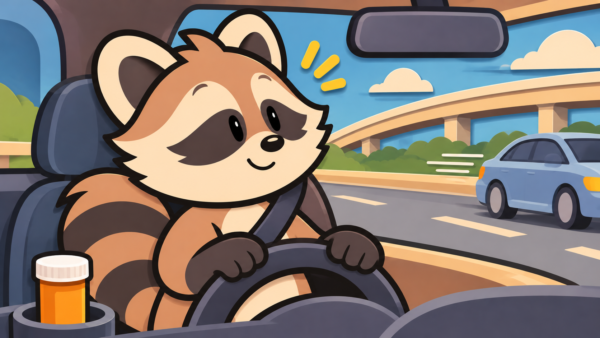
One of the biggest changes I’ve noticed since starting ADHD medication is how I react to other drivers.
I used to be more impatient in traffic.
Slow drivers could really get on my nerves.
But now?
I can usually shrug it off.
If someone is driving slowly, I’ll pass them when I get a safe opportunity.
I’m also less likely to make impulsive decisions behind the wheel.
The biggest change I’ve noticed isn’t necessarily my attention. It’s how I react emotionally.
I can still get distracted, miss an exit, or catch myself speeding without realizing it.
What Does the Research Say?
Research suggests ADHD medication can improve some driving-related outcomes.
A large 2017 study published in JAMA Psychiatry examined more than 2.3 million people with ADHD.
Researchers found that months when people received ADHD medication were associated with lower rates of motor vehicle crashes compared with months when they weren’t receiving medication.
In comparisons involving the same individuals, the reductions were approximately 38% for men and 42% for women.
Those findings are encouraging, although the observational study doesn’t prove medication alone caused the reduction.
Medication timing can also matter. Depending on the medication, its effects may change throughout the day, including when a dose is wearing off.
If you notice more driving difficulties at certain times, that’s worth discussing with your prescriber. Don’t adjust your medication schedule on your own.
For me, medication has helped most noticeably with impatience and impulsive reactions. But I still have to manage distractions.
What Helps Me Stay Focused While Driving?
Over time, I’ve figured out a few things that seem to help.
None is a perfect solution, but they’ve made certain situations easier to manage.
1. Listening to Music
Music generally helps me stay engaged while driving.
I don’t experience the same tendency to drift into my thoughts that I sometimes notice with podcasts.
That’s my personal experience, though. Someone else might find music distracting.
The important thing is recognizing what helps you stay attentive without interfering with your awareness of the road.
2. Using Cruise Control on Long Drives
I sometimes use cruise control on long drives because I can speed without realizing it.
It helps me maintain a more consistent speed.
But there’s a catch.
Some ADHD driving experts recommend avoiding cruise control during monotonous highway driving because reducing your involvement in controlling the vehicle may make it easier for your attention to wander.
That recommendation appears in expert guidance on improving driving safety for people with ADHD.
So while cruise control helps me manage my speed, I can’t assume it’s helping my attention.
I still need to monitor traffic, remain actively engaged, and respond to changing conditions. Cruise control also isn’t appropriate when weather or road conditions make it unsafe.
3. Turning On Waze Voice Directions
Voice navigation can help because I don’t have to keep looking at the screen to know where I’m going.
The downside?
That damn voice can get annoying.
Sometimes it feels like Waze has something to tell me every nine seconds.
Still, having directions read aloud can be useful, especially when I’m going somewhere unfamiliar.
I try to have my destination entered before I start driving.
4. Leaving My Phone Alone
This is a big one.
Phones are distracting, and I’ve noticed how easily they can pull attention away from driving.
So I try my best not to pay attention to mine.
My general rule is that if something can’t be handled safely through CarPlay, it can wait.
But even CarPlay requires judgment.
Just because something appears on your car’s screen doesn’t mean it’s safe to interact with while driving.
If it requires looking away from the road, reading something, or navigating through menus, waiting until you’re parked is the safer option.
5. Having Someone to Talk To
Interestingly, talking to a passenger actually helps me stay engaged.
I enjoy having someone to talk to while driving.
It’s different from listening to a podcast, which can sometimes send me into my own thoughts.
That doesn’t mean conversations can’t be distracting.
They absolutely can.
But it’s another example of how attention doesn’t always work the same way in every situation.
Practical Tips for Driving With ADHD
If you recognize some of these experiences, here are a few things worth trying.
Set your GPS before leaving. Enter your destination and review unfamiliar turns before starting your trip.
Put your phone away. Silence notifications and avoid checking messages. If something needs your attention, stop somewhere safe.
Identify your distractions. Pay attention to whether certain audio, conversations, or activities make it harder to concentrate.
Practice active scanning. Regularly check the road ahead, surrounding traffic, mirrors, and speedometer. Don’t rely on simply looking straight ahead.
Watch your speed. If you tend to speed without realizing it, check your speedometer regularly. Speed alerts may also help without reducing your involvement in driving.
Don’t panic when you miss an exit. Let your GPS recalculate. Never make a sudden lane change or unsafe maneuver to correct a missed turn.
Take breaks when necessary. If you’re struggling to stay alert, find somewhere safe to stop.
Take repeated close calls seriously. If you’re frequently missing important traffic information or reacting late, consider discussing it with your healthcare professional. Additional driver training may also help.
For more information, CHADD has a resource specifically about ADHD and driving.
Does Having ADHD Mean You’re a Bad Driver?
No.
Having ADHD doesn’t automatically determine whether someone is a good or bad driver.
But it can create challenges that deserve attention.
I’ve experienced missed exits, unintentional speeding, and moments when I wasn’t paying enough attention.
I also genuinely enjoy driving, including long trips, and people trust me behind the wheel.
Both things can be true.
Being comfortable behind the wheel doesn’t make someone immune to distractions.
And acknowledging those distractions is part of becoming a safer, more attentive driver.
Final Thoughts
Sometimes driving with ADHD is frustrating in ways that are almost funny.
You can have a GPS practically holding your hand through an entire trip and still miss the exit because your brain decided to spend the last five minutes imagining a Porsche GT3 RS in lava orange.
Other times, the consequences of getting distracted are much more serious.
I’ve learned to pay attention to what distracts me and what seems to help.
Music works better for me than podcasts. Voice navigation helps, even when it gets annoying. And I’ve become more deliberate about leaving my phone alone.
Medication has also helped me become less impatient and impulsive around other drivers, even though it hasn’t eliminated my attention difficulties.
For me, driving with ADHD isn’t about being a bad driver. It’s about recognizing when my attention is getting in the way and taking those moments seriously.