
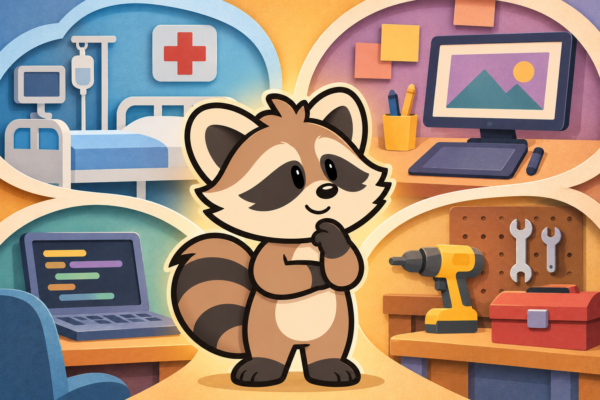
I’ve worked as a Spanish-English interpreter for many years, first in mental healthcare and now in a hospital setting.
And something interesting I’ve noticed throughout my career is how differently people approach the same kind of work.
I’ve joked before that being neurospicy should be one of the prerequisites for becoming an interpreter.
Obviously, that’s not an actual job requirement.
But it got me thinking about why I enjoy interpreting as much as I do.
Every assignment is different. I get to help people, solve problems, and walk into situations where I don’t necessarily know what’s going to happen.
And once I’m at a patient’s bedside, everything else seems to disappear.
It’s just me, the patient, the medical team, and whatever is being communicated.
I’m completely focused on what’s happening in front of me.
For someone who’s spent much of his life dealing with ADHD, finding a job where that kind of focus comes naturally has been pretty damn nice.
But here’s the thing.
I don’t think interpreting is necessarily the perfect career for someone with ADHD.
I think I found a career that happens to work well with how my ADHD affects me.
And there’s a difference.
What Are the Best Careers for People With ADHD?
There isn’t one career that’s best for everyone with ADHD.
Some people enjoy fast-paced environments. Others prefer predictable routines. Some like working independently, while others need frequent interaction.
What matters is finding work that interests you and provides the kind of variety, structure, and responsibility that helps you function.
For me, it’s a combination of predictability and unpredictability.
Give me a schedule, tell me where I need to be, and I’ll do my work.
But I also enjoy knowing that every patient encounter will be different.
Someone else might find that exhausting.
That’s why I wouldn’t recommend choosing a career simply because you found it on a list of supposedly ADHD-friendly jobs.
You need to understand what the job actually involves.
10 Careers Worth Considering if You Have ADHD
These aren’t careers scientifically proven to be better for people with ADHD.
They’re examples of jobs that offer different combinations of structure, variety, interaction, independence, and hands-on work.
The important part is figuring out which combination works for you.
1. Medical Interpreter
I’ll start with the one I know best.
Medical interpreters help patients and healthcare professionals communicate when they don’t speak the same language.
What I enjoy most is that every assignment brings something different.
One moment, I might be interpreting during a routine appointment. The next, I’m helping a family understand something complicated about their child’s medical care.
There’s also structure.
I receive assignments, know where I need to go, and understand what I’m responsible for.
Why it might appeal to someone with ADHD: Clear assignments, meaningful interactions, varied situations, and opportunities for sustained attention during individual encounters.
What can be difficult: Documentation, switching between assignments, emotionally demanding situations, and remembering administrative responsibilities.
And trust me, that documentation part is real.
I’ll get to that in a minute.
2. Nursing
Nursing can offer a combination of patient interaction, problem-solving, established procedures, and varied responsibilities.
But nursing jobs aren’t all the same.
An emergency department nurse may experience a very different workday from someone working in an outpatient clinic.
Potential appeal: Meaningful work, direct patient care, structured procedures, and changing situations.
Potential challenges: Documentation, interruptions, multitasking, long shifts, and serious consequences when mistakes happen.
If you’re interested in nursing, investigate the specific setting rather than assuming every nursing position involves the same work.
3. Emergency Medical Technician (EMT)
EMTs respond to medical emergencies, assess patients, provide care within their training, and transport patients when necessary.
The work can involve clear protocols alongside unpredictable situations.
Potential appeal: Hands-on responsibilities, teamwork, immediate problems to solve, and varied assignments.
Potential challenges: High stress, irregular hours, documentation, and the need to remain accurate under pressure.
Being comfortable with urgency doesn’t automatically mean emergency medicine is a good fit.
4. Teacher
Teaching combines planning and established routines with frequent interaction and situations that change throughout the day.
Someone who enjoys explaining things, helping others learn, and working with people might find it rewarding.
Potential appeal: Meaningful work, creativity, interaction, and a structured school schedule.
Potential challenges: Lesson planning, grading, administrative responsibilities, classroom management, and frequent interruptions.
The parts of teaching that happen outside the classroom deserve just as much consideration as the teaching itself.
5. Electrician
Electricians install, maintain, and repair electrical systems.
Depending on the position, the work may involve troubleshooting, physical activity, and moving between different projects or locations.
Potential appeal: Hands-on problem-solving, concrete tasks, technical skills, and varied projects.
Potential challenges: Safety requirements, detailed procedures, training, and sustained attention to potentially hazardous work.
6. Automotive Technician
Automotive technicians diagnose, maintain, and repair vehicles.
For someone who enjoys understanding how things work, identifying problems, and seeing tangible results, this could be appealing.
Potential appeal: Hands-on work, troubleshooting, established procedures, and practical problem-solving.
Potential challenges: Documentation, repetitive maintenance tasks, physical demands, and the need for careful attention to safety.
7. Graphic Designer
Graphic designers create visual materials for websites, advertising, publications, and other projects.
The work can involve creative problem-solving and opportunities to work independently.
Potential appeal: Creative expression, different projects, and opportunities for focused work.
Potential challenges: Client revisions, deadlines, project organization, and periods of repetitive computer work.
Liking creative projects doesn’t necessarily mean you’ll enjoy every part of working as a designer.
8. Software Developer
Software developers design, build, test, and maintain software.
Some positions involve independent concentration, while others require extensive collaboration and coordination.
Potential appeal: Problem-solving, technical challenges, project variety, and opportunities for focused work.
Potential challenges: Debugging, long projects, documentation, changing requirements, and learning new technologies.
I’ve considered learning Python myself.
But I’ve also learned that being excited about a career and enjoying the process required to enter it are two different things.
9. Fitness Trainer
Fitness trainers help people work toward exercise and fitness goals.
Depending on the setting, the work may involve coaching, physical activity, planning, and regular interaction with clients.
Potential appeal: Movement, interpersonal interaction, visible progress, and varied client needs.
Potential challenges: Scheduling, recordkeeping, inconsistent hours, and finding or retaining clients.
10. Accountant or Bookkeeper
This might surprise people who assume everyone with ADHD needs a constantly changing environment.
But some people prefer organized, predictable work.
Accounting and bookkeeping can involve established procedures, clear deadlines, and detailed financial tasks.
Potential appeal: Structure, defined responsibilities, predictable processes, and opportunities for independent work.
Potential challenges: Repetitive tasks, detailed accuracy requirements, deadlines, and sustained concentration.
ADHD doesn’t automatically mean you dislike routine.
For some people, routine is exactly what makes a job manageable.
What Makes a Career a Good Fit for ADHD?
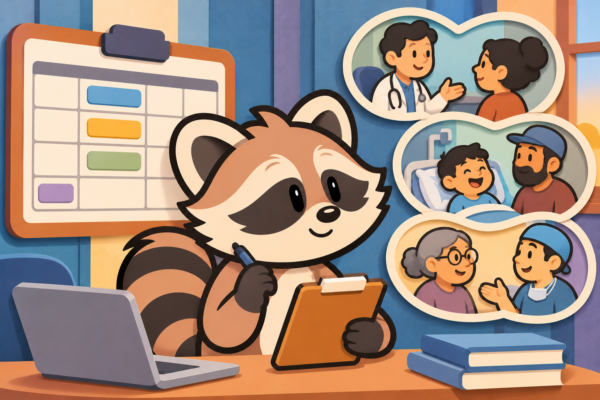
Something I’ve learned from interpreting is that I don’t necessarily want a job that’s unpredictable all the time.
I want a predictable routine with different challenges throughout the day.
At the hospital, I might receive a schedule outlining my assignments.
That’s helpful. I know what I’m supposed to do.
But once I arrive at an appointment, I don’t know exactly what the conversation will involve.
I might also pick up additional assignments when another interpreter needs help.
So I have structure, independence, and variety.
When you’re evaluating a career, consider the actual working conditions rather than focusing entirely on the job title.
Ask yourself:
- Do I enjoy interacting with people, or would I rather work independently?
- Do I prefer predictable routines or changing responsibilities?
- Do I need clear assignments, or am I comfortable organizing my own work?
- Do I enjoy solving immediate problems or working toward long-term goals?
- How much paperwork, scheduling, and administrative work will I need to manage?
Your answers might be completely different from mine.
That’s fine.
The goal isn’t to find a job that matches somebody else’s ADHD.
It’s to find one that works for you.
Even a Career You Love Can Be Difficult With ADHD
Remember when I mentioned documentation?
Here’s where things get interesting.
Between interpreting assignments, we’re supposed to complete documentation.
Sometimes I do it between appointments.
Sometimes I tell myself I’ll get to it later.
And sometimes, before I know it, I’ve got three weeks of documentation due tomorrow.
Suddenly, that deadline becomes very real.
And here comes what I jokingly call one of the beautiful skills we ADHDers sometimes have.
When something becomes urgent enough, I can become intensely focused on getting it done.
It’s not necessarily that I didn’t care about the documentation.
Sometimes I’m busy with other assignments. Sometimes I forget about it entirely.
Sometimes it’s simply out of sight, out of mind.
But once that deadline is staring me in the face, I’m getting it done.
Now, I wouldn’t recommend relying on last-minute urgency as a productivity system.
It’s stressful, and it can create unnecessary problems.
But I think this illustrates something important.
You can be genuinely good at your job and still struggle with certain responsibilities because of ADHD.
Those two things aren’t mutually exclusive.
The goal isn’t necessarily finding a career where you’ll never experience ADHD-related difficulties.
It’s finding work where the overall fit makes those difficulties more manageable—and where you can put systems in place for the parts that don’t come naturally.
What Does Research Say About ADHD and Careers?
ADHD can affect workplace functioning, particularly when responsibilities require sustained attention, organization, time management, and self-regulation.
Research has associated adult ADHD with occupational difficulties and reduced workplace productivity.
For example, a study by de Graaf and colleagues examined adult ADHD and its effects on workers across multiple countries.
Research has also explored how motivation and reward processing relate to ADHD. A study by Volkow and colleaguesfound an association between differences in dopamine reward pathways and motivation in adults with ADHD.
That may help explain why some people with ADHD find certain tasks easier to engage with than others.
But neither finding means people with ADHD are automatically better at creative jobs, emergency services, or fast-paced environments.
And there isn’t an established scientific ranking of the best careers for people with ADHD.
Individual interests, abilities, symptoms, support needs, and workplace conditions all matter.
Before Changing Careers, Consider This
I’ve thought about leaving interpreting more than once.
Python programming, casework, therapy, web design, IT.
At different points, these careers interested me.
And I genuinely believed I could learn the skills required.
But something kept happening.
I’d get excited about a new possibility and start learning.
Then, somewhere along the way, the novelty would wear off.
The material became harder to understand. Sometimes I’d start failing a class. Eventually, I’d lose interest or give up.
And the process of getting qualified for an entirely different career started feeling mentally exhausting.
I’m not saying that’s what happens to everyone with ADHD.
I’m saying it’s something I’ve experienced repeatedly.
It’s taught me to consider more than whether a career sounds interesting.
You also need to understand what it takes to get there and what the work looks like once you’re doing it.
Before committing to a career change, try to:
- Talk to someone who actually works in the field.
- Find out what a typical workday involves, including the boring parts.
- Research the education, training, licensing, and costs required.
- Look for opportunities to shadow someone or try a small, realistic project.
- Consider whether the work still appeals to you after the initial excitement fades.
And if the training process is difficult, that doesn’t automatically mean the career is wrong for you.
It may mean you need a different learning approach, additional support, or a more manageable path toward qualifying.
How to Find an ADHD-Friendly Career
If I had to give someone with ADHD one piece of career advice, it would be this:
Find something that interests you and offers variety. But understand that your definition of interesting and varied might be completely different from mine.
For me, interpreting works because I enjoy helping people, solving problems, and having different experiences within a predictable schedule.
For someone else, that same combination might be exhausting.
They might prefer working independently, following established procedures, or spending hours solving one complicated problem.
And that’s why I think the phrase ADHD-friendly career can sometimes be misleading.
It makes it sound like there’s a list of jobs specifically designed for our brains.
There isn’t.
There are jobs with different demands, environments, responsibilities, and expectations.
The challenge is figuring out which combination works best for you.
Final Thoughts
I’ve spent many years working as an interpreter.
It’s not a career I originally chose because I thought it would be good for my ADHD.
But looking at it now, I can see why it works for me.
I get structure without doing exactly the same thing every day. I get independence without having to figure out every assignment myself. And I get to help people in situations where communication genuinely matters.
Do I still struggle with certain responsibilities?
Absolutely.
Ask me about my documentation.
But those difficulties don’t erase the fact that I enjoy what I do.
That’s what I’d encourage anyone with ADHD to look for: work that interests you, suits your needs, and has challenges you can realistically manage.