
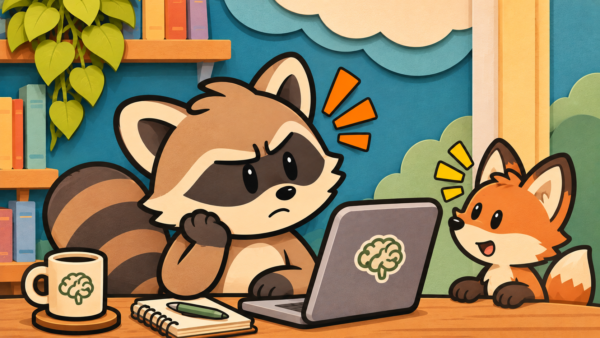
I hate being interrupted when I’m finally focused on something.
And when you have ADHD, getting focused isn’t always easy in the first place.
I’m talking about those moments when you’re completely absorbed in something. You’re writing, reading, playing a video game, or working on a project. Everything is clicking, and you’re making progress.
Then someone interrupts you.
Suddenly, you’re expected to stop whatever you’re doing and pay attention to something else.
For me, that can be incredibly irritating.
Not because I refuse to help or because whatever I’m doing is automatically more important.
It’s because someone is pulling me away from something I was finally in the zone for.
And what people might not realize is that getting back into that zone isn’t always as simple as sitting down and starting again.
I’m in the Zone. Please Leave Me Alone.
Imagine I’m working on an article for ADHDefined.
I’m focused. The ideas are coming together. I know what I want to say, and I’m actually getting somewhere.
Then someone walks in.
“Hey, can you take out the trash?”
The trash?
Right now?
What happens if I don’t? Is it going to start crawling out of the trash can? Is some radioactive energy going to escape and give everyone cancer?
Obviously, I’m exaggerating.
But that’s how ridiculous the urgency can feel when someone interrupts me.
It’s not that I refuse to take out the trash.
I’ll take it out.
I just don’t understand why it needs to happen at the exact moment I’m finally getting something done.
I don’t necessarily hate being asked to do something. I hate being expected to drop everything immediately.
If someone says, “Hey, whenever you get a chance, can you take out the trash?” that’s completely different.
Now I have the freedom to finish what I’m doing.
I can find somewhere to stop.
I can handle their request without feeling like someone just yanked me away from something important.
That little bit of freedom makes a huge difference.
Why Does Being Interrupted Make Me So Angry?
For me, the irritation is almost immediate.
I’m pretty sure my facial expression gives me away before I even say anything.
But I usually catch myself.
Do you really want to start a fight over something this dumb?
Just let it go.
And a lot of times, I do.
The irritation fades. I handle whatever needs to be done, and life goes on.
But here’s the part people don’t necessarily see.
The interruption might be over, but that doesn’t mean I can immediately get back to what I was doing.
ADHD can involve difficulties with managing attention and strong emotions.
In fact, a 2020 review of 13 studies involving 2,535 participants found that adults with ADHD experienced significantly more difficulty regulating emotions than adults without ADHD.
That doesn’t mean everyone with ADHD gets angry when interrupted. It also doesn’t mean every moment of irritation is caused by ADHD.
But it does help explain why frustration can be harder to manage for some people with ADHD.
For me, though, the biggest problem often comes afterward.
Getting Back Into the Zone Isn’t as Easy as It Sounds
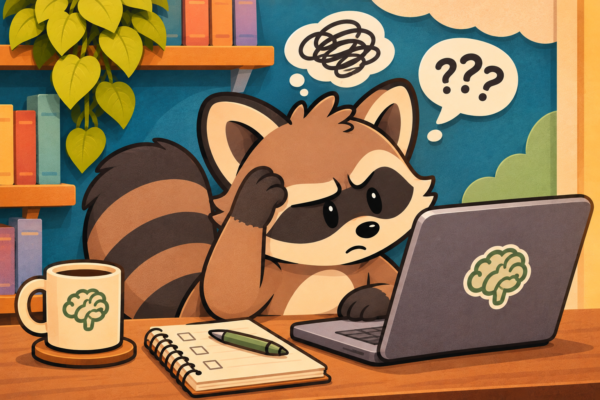
Let’s say I’m writing an article.
I’ve got ideas flowing. I know what I want to say. I’m typing, thinking, and making progress.
Someone interrupts me.
I stop what I’m doing.
I handle whatever they need.
Then I sit back down.
The article is still there.
The computer is still there.
Everything is exactly where I left it.
Except my momentum.
That’s gone.
And telling myself, All right, let’s get back to work, doesn’t magically bring it back.
It’s like trying to cold crank a truck in the middle of winter.
Sometimes it starts right up.
Sometimes you have to keep trying.
And sometimes that damn thing isn’t starting no matter what you do.
That’s what returning to a task can feel like for me.
I might try to get going again. I’ll even put on some lo fi music, hoping to recreate the conditions that helped me concentrate in the first place.
Sometimes it works.
Other times, I can tell nothing productive is going to happen.
So I abandon whatever I was doing.
And yes, that’s frustrating.
Why interruptions can make it harder to concentrate
Researchers have studied what happens when people return to a task after being interrupted.
They’ve found that interruptions can create something called a resumption lag.
That’s just a technical way of saying it takes time to figure out where you were and get going again.
A 2016 study involving 229 participants found that longer interruptions generally made returning to a task more difficult. People with lower working memory capacity also tended to need more time to resume.
Working memory is what helps you temporarily hold information in your head while you’re using it.
Think about remembering the sentence you were about to write or the next step in something you’re working on.
When you’re interrupted, some of that information can become harder to retrieve.
The study wasn’t specifically about ADHD, so it doesn’t prove why I react the way I do.
But it helps explain why returning to an interrupted task can require more effort than people realize.
Not Every Interruption Affects Me the Same Way
Here’s something I’ve noticed.
If I’m cleaning or cooking, I can usually return to what I was doing without much trouble.
I know where I left off.
The dishes are still there. The food still needs cooking. The next step is pretty obvious.
But writing?
Reading?
Playing a video game?
Working on something that requires me to hold several thoughts together?
That’s different.
Those activities are much harder for me to resume once I’ve been pulled away.
I might remember what I was doing, but remembering isn’t the same as getting back into the mental state I was in.
Sometimes I don’t lose track of the task. I lose the feeling that made me want to keep doing it.
A 2022 study examining interruptions and task complexity found that returning to more complex tasks required more time.
That makes sense to me.
Stopping in the middle of washing dishes is one thing.
Stopping when I’m halfway through an idea and trying to remember exactly where I was going with it?
Completely different.
Sometimes I Forget What They Asked Me to Do
Now here’s where I have to admit something.
I want people to let me finish what I’m doing.
But sometimes, when they do, I completely forget about whatever they asked me to do.
Someone says, “Whenever you get a chance, can you handle this?”
I agree.
I go back to what I was doing.
And the request disappears from my mind.
Next thing I know, they’re doing it themselves.
And my reaction?
A little guilt.
A little annoyance.
A little defensiveness.
Shit, I forgot.
But also:
If you could do it yourself, why ask me?
And:
I was busy doing something too.
All three thoughts can happen.
But I also recognize something.
Just because someone can do something themselves doesn’t mean they should have to.
They might already have other responsibilities.
And if I agreed to do something, forgetting about it doesn’t magically erase that responsibility.
That’s one of the frustrating contradictions of this whole thing.
I don’t want to be interrupted.
But I also need to figure out how to remember what someone asked me to do.
What Can Help When You Hate Being Interrupted?
I haven’t figured out some magical way to prevent interruptions from bothering me.
And I haven’t sat everyone down and explained why they affect me this way.
But there are a few things I’ve noticed, along with some strategies that might make interruptions easier to handle.
1. Give me a chance to finish what I’m doing
This is probably the biggest one.
There’s a huge difference between:
“Take out the trash.”
And:
“Whenever you get a chance, can you take out the trash?”
The second request gives me some control over when I stop.
I’m much less irritated because I don’t feel like I have to abandon what I’m doing immediately.
Obviously, some things genuinely need immediate attention.
But not everything is an emergency.
And when I’m the one asking someone else to do something, I usually end the request with:
“Whenever you get a chance, no rush.”
Because that’s exactly how I prefer people to approach me.
2. Find somewhere you can safely stop
I’ve written about this in my article on ADHD Task Switching.
I call these stopping points checkpoints.
Maybe I finish a paragraph.
Maybe I write down the idea I’m working on.
Maybe I reach a point where I know I’ll be able to return without having to reconstruct everything in my head.
It’s like saving your progress in a video game.
You don’t necessarily need to finish the entire game.
You just need somewhere safe to stop.
Checkpoints don’t guarantee I’ll regain my momentum, but they give me a better chance.
And there’s an important distinction between asking someone for two minutes to finish a paragraph and asking them to wait until I’m finished with an entire project.
One has a clear stopping point.
The other could take considerably longer than anyone expected.
3. Don’t rely entirely on remembering the request
This is something I need to be more intentional about.
If someone asks me to do something later, I can forget.
One thing worth trying is writing down the request or setting a reminder before returning to whatever you were doing.
That way, you don’t have to keep the request floating around in your head while you’re concentrating on something else.
It doesn’t need to become some elaborate organizational system.
The goal is simply to remember what you agreed to do.
Because asking someone to give you time to finish is reasonable.
Expecting them to remember everything for you isn’t.
4. Try recreating the conditions that helped you focus
When I lose my momentum, sometimes I put on lo fi music.
I’m not claiming lo fi music is some scientifically proven ADHD solution.
I’m trying to recreate the conditions I was working in before the interruption.
Sometimes that helps me get going again.
Sometimes it doesn’t.
But it’s one of the things I actually try.
If you’re struggling to resume something, it may help to return to the same environment, review where you stopped, or look at a note about what you planned to do next.
The idea is to make returning easier instead of expecting yourself to instantly recover your concentration.
5. Remember that the other person doesn’t know what’s happening in your head
This is probably the part I need to work on most.
Nobody automatically knows how difficult it can be for me to regain my momentum.
They see me sitting at a computer.
They ask me to do something.
From their perspective, it’s a simple request.
They don’t necessarily see the concentration, the ideas, or everything I’m trying to keep track of.
And I haven’t really explained it to them.
So expecting them to understand something I’ve never communicated isn’t particularly fair.
I can ask for a few minutes without turning it into an argument.
And I can be more specific about when I’ll actually be available.
That’s different from expecting everyone to leave me alone indefinitely.
So, Is Getting Angry When Interrupted an ADHD Thing?
It can be related.
ADHD can make certain parts of dealing with interruptions more difficult, including shifting attention, keeping track of what you were doing, and managing frustration.
But not everyone with ADHD gets angry when interrupted, and plenty of people without ADHD dislike interruptions too.
For me, the biggest issue isn’t necessarily the interruption itself.
It’s losing control over when I stop, followed by the possibility that I won’t be able to regain the momentum I had.
And sometimes the interruption takes only a minute.
But getting back into what I was doing?
That can take considerably longer.
Or it might not happen at all.
I don’t expect people to understand every little thing happening in my head.
But I do wish more people understood that when someone is deeply focused on something, asking them to stop isn’t always as simple as it sounds.
Sometimes all it takes is adding five words to the request:
“Whenever you get a chance, no rush.”
That makes a world of difference to me.