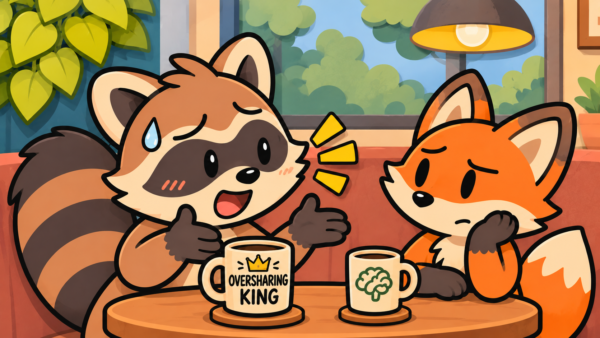
Have you ever realized you’re oversharing when you’re already 75% through telling someone a story?
Because I have.
And now I’m stuck.
I know I’ve said too much. I’m already embarrassed. I’m telling myself to stop talking.
But what am I supposed to do?
Just stop halfway through the story?
Say, Oh yeah, sorry about that, and suddenly refuse to finish?
Nope.
Apparently, I have to finish it.
And when I’m finally done?
FAAAAAAAA!
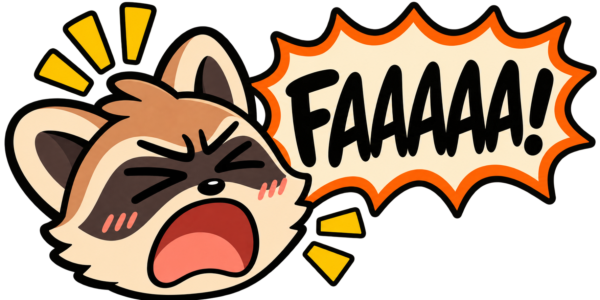
If you’ve ever seen that old rage-face meme, that’s pretty much what’s happening inside my head.
That’s one of the most frustrating things about ADHD oversharing. Sometimes you realize you’re saying too much while you’re still talking, but stopping yourself feels almost impossible.
Oversharing means revealing more personal information than you intended or than the situation calls for.
Anyone can do it. But for some people with ADHD, impulsivity can make it harder to control what comes out of their mouth.
And I know that feeling pretty well.
When You Know You’re Oversharing but Can’t Stop
Before I started taking ADHD medication, I would just open my big stupid mouth and get carried away.
Next thing I knew, I was saying the dumbest things ever.
Sometimes I wouldn’t realize I’d overshared until later.
Other times, I’d realize it while I was still talking.
It’s almost like the words are coming out faster than I can decide whether I should say them.
I’ll be talking, and somewhere in the middle of the conversation, I’ll realize:
Okay, you’re oversharing.
There’s a little embarrassment.
Then comes the internal warning.
Okay, just stop.
Except the words keep coming.
And now I’ve already said most of what I was going to say.
That’s what makes it so frustrating.
I’m not always unaware of what I’m doing. Sometimes I know exactly what’s happening, and I still can’t seem to stop myself.
Why Do People With ADHD Overshare?
One possible explanation is impulsivity.
That’s when you act or speak before you’ve had enough time to think through what you’re doing.
With ADHD, this can show up as interrupting people, blurting things out, talking excessively, or saying something before deciding whether it should be said.
The National Institute of Mental Health identifies excessive talking and difficulty controlling impulses among the symptoms associated with ADHD.
But here’s what I find particularly frustrating.
Knowing you should stop talking and actually being able to stop talking aren’t necessarily the same thing.
Sometimes I realize I’m oversharing after the words have already come out.
Other times, I recognize what’s happening before I’ve finished speaking.
The problem is that recognizing it doesn’t always stop me from continuing.
And once I’ve already revealed most of the story, finishing somehow feels easier than stopping.
That doesn’t mean everyone who overshares has ADHD.
People can share too much because they’re nervous, excited, trying to connect with someone, or simply caught up in a conversation.
But when ADHD-related impulsivity is part of the problem, controlling how much you say can be genuinely difficult.
The Embarrassment Doesn’t End When the Conversation Does
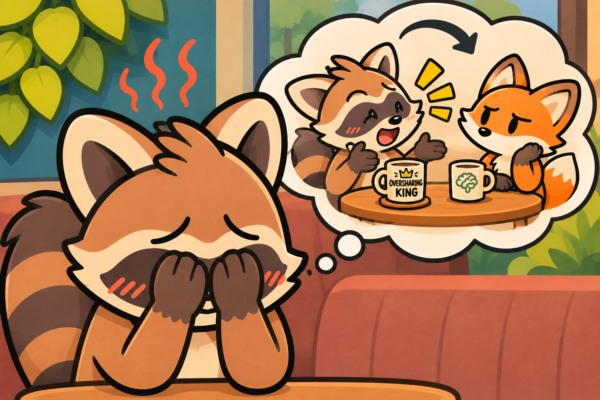
Here’s another thing I hate about oversharing.
The conversation ends.
You go about your day.
And then, sometimes much later, you remember something embarrassing you said.
And suddenly, you’re embarrassed all over again.
For me, it’s not just one thing that bothers me afterward.
It’s everything.
I regret revealing something personal.
I wonder whether the other person sees me differently now.
And I get frustrated with myself because sometimes I knew I should stop talking and didn’t.
It’s like getting embarrassed twice.
Once when you realize what you’re saying.
And again when you remember saying it.
The conversation might be over, but apparently, the embarrassment didn’t get the memo.
Did ADHD Medication Help Me Stop Oversharing?
Actually, yes.
Before I started taking medication, I’d get carried away talking without giving much thought to what was coming out of my mouth.
After starting medication, I noticed something different.
I’m better at going through what I’m about to say in my head before I say it.
Sometimes I’ll think about sharing something and decide:
Nah, they don’t need to know all that.
And I move on.
Other times, I still have the urge to say it, but I’m better able to hold myself back.
That might not sound like a huge difference.
But when you’re used to saying things before thinking them through, having that extra moment to decide can matter.
Medication hasn’t completely stopped me from oversharing, though.
There are still times when I know exactly what’s about to happen.
I know I’m probably going to regret what I’m about to say.
And the words come out anyway.
Research suggests that stimulant medications can improve certain aspects of impulse control in people with ADHD.
A systematic review of stimulant medication and inhibitory control found improvements in people’s ability to stop or withhold responses, although the average effects were modest.
That doesn’t mean medication specifically treats oversharing or that everyone will notice the same improvement I did.
But it helps explain why some people may find it easier to think before speaking when their ADHD symptoms are better managed.
How to Stop Oversharing With ADHD
Knowing why you overshare is useful.
But what are you supposed to do when you’re already halfway through a conversation and realize you’ve said too much?
That’s the part I find especially difficult.
Here are a few strategies worth trying.
1. You don’t have to finish the story
This is the biggest one.
Remember my 75% problem?
I’ve already told someone most of a story, and now I feel like I have to finish it.
But here’s something worth remembering.
You can stop talking even after you’ve started oversharing.
Seriously.
You don’t have to explain why you’re stopping, and you don’t have to finish revealing something personal just because you’ve already started.
You can say:
Actually, I’m getting way too far into this.
Or:
Anyway, that’s probably more information than you needed.
Then change the subject.
Will it feel awkward?
Probably.
But compare that moment of awkwardness with the embarrassment of revealing something you really wanted to keep private.
Stopping halfway through might be the better option.
2. Have an exit line ready before you need it
Here’s the problem with telling yourself to stop oversharing.
By the time you realize what’s happening, you’re already talking.
And now you’re supposed to come up with a graceful way to end the conversation while your mouth is still going?
Good luck with that.
Instead, consider having a simple phrase ready.
Something like:
Anyway, long story short…
Or:
Actually, never mind. That’s a whole other conversation.
The point isn’t to memorize a perfect script.
It’s to give yourself an easier way out when you realize you’ve gone further than you intended.
3. Answer the question before telling the entire story
Sometimes a question only needs a short answer.
But it’s easy to start explaining the background, adding details, and getting further away from what the person originally asked.
One thing worth trying is answering the actual question first.
Then stop for a moment.
If the person wants more information, they can ask.
You don’t have to provide the entire backstory just to make your answer complete.
4. Decide what you don’t want to share
Not every conversation is the right place for personal information.
Something you feel comfortable telling a close friend might not be something you want to discuss with a coworker or someone you barely know.
Before certain conversations, it may help to think about which subjects you’d rather keep private.
That won’t guarantee you never overshare.
But it gives you a boundary to work with before you’re already halfway through revealing something.
5. What if you’ve already overshared?
Sometimes you’re going to realize it too late.
The conversation is over.
You’ve said what you said.
And now you’re replaying it.
If you revealed something sensitive, consider whether there’s anything practical you need to do, such as asking the person to keep the information private.
But if there’s nothing to address, repeatedly reviewing the conversation won’t change what happened.
You can recognize that you shared more than you intended without treating the memory as something you need to keep revisiting.
And if this kind of embarrassment becomes overwhelming or starts affecting your relationships, talking it through with a mental health professional may help.
Is Oversharing a Sign of ADHD?
It can be associated with ADHD, but oversharing by itself doesn’t mean you have the condition.
Oversharing isn’t a separate ADHD diagnostic criterion.
However, excessive talking, blurting things out, and difficulty controlling impulses are recognized ADHD-related behaviors that may contribute to oversharing.
What matters is the bigger picture.
Do you frequently struggle to control what you say?
Does it happen alongside other difficulties with attention, impulsivity, or restlessness?
Has it been a persistent pattern that affects your daily life?
Those questions are more useful than simply asking whether you talk too much.
If these difficulties are frequent and disruptive, a qualified healthcare professional can help you understand what may be contributing to them.
You Don’t Owe Anyone the Other 25%
If there’s one thing I want to remember about oversharing, it’s this.
Just because I’ve already started telling someone something doesn’t mean I have to finish.
Even if I’ve already said 75% of it.
Even if stopping feels awkward.
Even if my brain is telling me I might as well finish the story.
Because the remaining 25% might be exactly what I wish I’d kept to myself.