
What Are the Symptoms of ADHD?
ADHD has 18 recognized symptoms, divided into two groups: inattention and hyperactivity/impulsivity.
But ADHD symptoms don’t always look the way people expect.
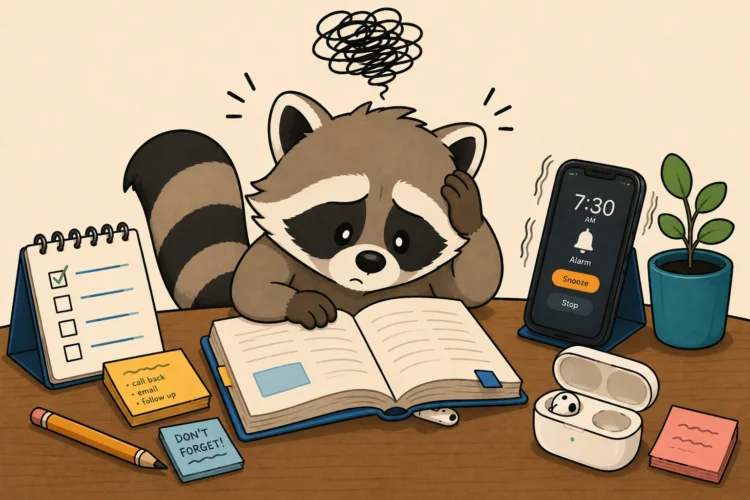
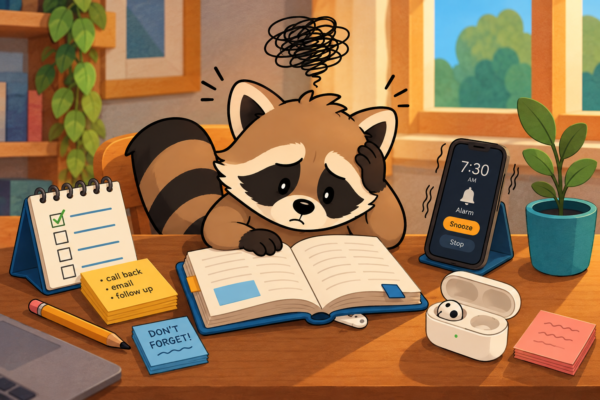
Sometimes it’s reading the same paragraph five times because nothing is sticking.
Sometimes it’s forgetting something important even though you genuinely wanted to remember it.
Or interrupting someone because your brain has already figured out what you think they’re going to say.
Here are the 18 symptoms doctors look for when evaluating ADHD.
The 9 Inattentive ADHD Symptoms
- Making careless mistakes or missing important details.
- Difficulty staying focused, even when you’re trying.
- Seeming not to listen when someone speaks directly to you.
- Starting tasks but struggling to finish them.
- Difficulty organizing tasks, managing time, or keeping track of responsibilities.
- Avoiding tasks that require sustained mental effort, like paperwork or studying.
- Frequently losing things, including keys, phones, and important documents.
- Being easily distracted by your surroundings or your own thoughts.
- Forgetfulness in everyday life, including appointments, errands, and responsibilities.
The 9 Hyperactive and Impulsive ADHD Symptoms
- Fidgeting or squirming, such as bouncing your leg or constantly moving your hands.
- Difficulty staying seated when you’re expected to remain sitting.
- Running, climbing, or feeling restless when staying still is expected.
- Difficulty doing activities quietly.
- Feeling constantly on the go, almost like you’re driven by a motor.
- Talking excessively, sometimes without realizing it.
- Answering before someone finishes asking a question.
- Difficulty waiting your turn, whether in conversations or activities.
- Interrupting or intruding on others.
You don’t need all 18 symptoms to have ADHD.
Some people mainly struggle with attention. Others experience more hyperactivity and impulsivity. Some experience both.
And while this list is useful, it doesn’t always explain what living with ADHD actually feels like.
That’s where things get interesting.
What ADHD Symptoms Actually Feel Like

Life before I knew I had ADHD was hell.
The weird thing is, I didn’t always look like someone who was struggling.
Elementary school was a breeze.
Straight A’s.
I remember rushing through tests just so I could get up, turn them in, and have something else to do.
Read. Doodle. Bother the other kids.
Anything except sit there waiting.
Because sitting there waiting was torture.
Then sixth grade showed up.
And apparently school decided we were done messing around.
Suddenly, everything became harder.
Math was trash.
English was my favorite subject, but sometimes I’d read the same paragraph over and over because absolutely nothing was sticking.
By high school, I was barely making it.
I barely graduated.
Looking back, I can recognize some of the difficulties I was having.
But back then?
Nobody was explaining ADHD symptoms to me.
I wasn’t thinking:
I’m having difficulty sustaining my attention.
I was thinking:
Why the fuck can’t I remember what I just read?
And that’s why I wanted to write this article.
Because the clinical descriptions are useful.
But sometimes you need someone to explain what they actually look like in real life.
What Are ADHD Symptoms in Adults?
Adult ADHD doesn’t always look like the hyperactive kid people picture when they hear the word ADHD.
Sometimes the hyperactivity becomes less obvious.
Instead of running around, you might feel restless while sitting at your desk.
Instead of forgetting homework, you’re forgetting appointments, bills, or things your partner asked you to do.
Instead of interrupting your teacher, you’re interrupting coworkers or finishing your partner’s sentences.
And sometimes you don’t recognize these patterns until adulthood.
ADHD begins in childhood, but some people aren’t diagnosed until much later.
That can happen when childhood symptoms were overlooked or when adult responsibilities make existing difficulties harder to manage.
The CDC explains that ADHD symptoms can continue into adulthood, affecting work, relationships, and everyday responsibilities.
For me, school was an early example of how things changed as life became more demanding.
The difficulties didn’t suddenly appear in sixth grade.
They became harder to manage.
Inattentive ADHD Symptoms: What They Look Like in Real Life
One of the biggest misunderstandings about ADHD is that people with it simply can’t pay attention.
That’s not quite how it works.
Sometimes I can pay attention to something for an almost unreasonable amount of time.
Ask me about professional wrestling.
Actually, don’t.
We both have shit to do today.
ADHD can make it difficult to control where your attention goes and keep it there, especially when something isn’t interesting or rewarding.
Here’s how the nine inattentive symptoms can show up in everyday life.
1. Making Careless Mistakes
Ever finish something, check it, and feel absolutely certain you got everything right?
Then someone points out a mistake so obvious you can’t believe you missed it?
Wrong date.
Skipped question.
Missing attachment.
Sometimes the problem isn’t understanding the work.
It’s overlooking details even when you’re trying to be careful.
2. Difficulty Staying Focused
You read a paragraph.
Get to the bottom.
And realize you have absolutely no idea what you just read.
So you start over.
And over.
Meanwhile, you can spend hours focused on something you’re genuinely interested in.
That’s one of the frustrating parts of ADHD.
Your attention doesn’t always cooperate with what you’re trying to accomplish.
3. Seeming Not to Listen
This one hits close to home.
Sometimes when someone is talking to me, my brain starts predicting what they’re going to say.
Jesus Christ, I already know where you’re going with this.
So I start preparing my response.
Or I finish their sentence.
Apparently, my brain has decided:
We can expedite this process.
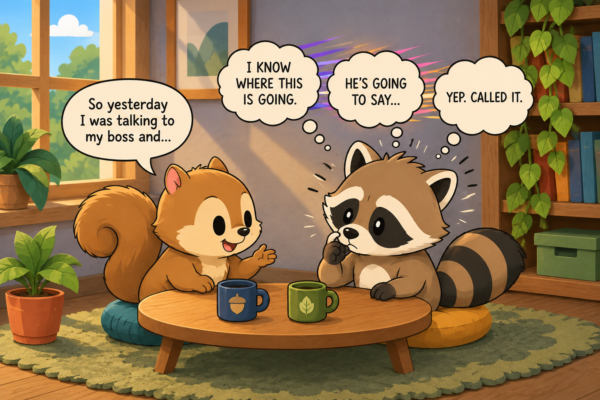
Typing that makes me realize how rude it can be.
But here’s what’s happening internally: I’m so busy anticipating the conversation that I sometimes stop fully listening to it.
4. Starting Tasks but Not Finishing Them
Imagine you’re cleaning the kitchen.
You find something that belongs upstairs.
So you take it upstairs.
While you’re there, you notice laundry.
Then you remember an email you need to send.
Twenty minutes later, you’re doing something completely different.
And the kitchen?
Still a mess.
ADHD can make it difficult to stay with a task long enough to finish it, especially when something else catches your attention.
5. Difficulty Organizing Tasks
I have apps.
Notes.
Calendars.
Reminders.
Systems for remembering the things I’m supposed to remember.
And they help.
There’s just one tiny flaw:
I have to remember to put the damn thing in the calendar.
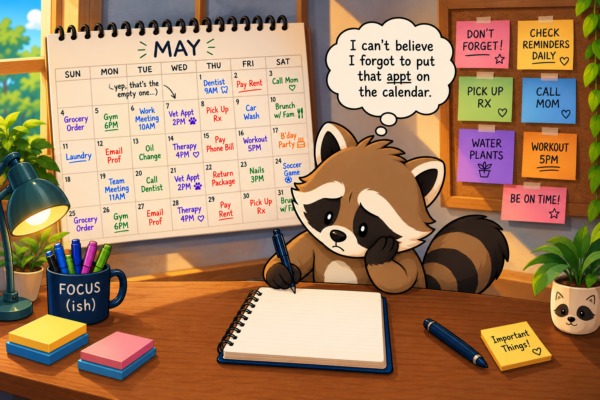
Organization difficulties aren’t always about having a messy desk.
They can involve planning, prioritizing, managing deadlines, and figuring out where to start.
These difficulties are closely connected to executive dysfunction.
6. Avoiding Tasks That Require Mental Effort
Some tasks aren’t particularly difficult.
But your brain looks at them and says:
Absolutely fucking not.
Paperwork.
Long emails.
Filling out forms.
Reading instructions.
You know the task needs to get done.
You might even want to do it.
But starting feels ridiculously difficult.
This can overlap with ADHD paralysis, when you feel stuck despite knowing what you need to do.
7. Frequently Losing Things
Keys.
Wallet.
Phone.
AirPods.
The thing you literally had in your hand thirty seconds ago.
Sometimes it feels like Dr. Strange opened one of those portal ring circle thingies and decided to pull up at my house just to take my AirPods.
Then you find them.
Exactly where someone told you to look.
(My bad, Dr. Strange.)
Frequently misplacing things is one of the recognized inattentive ADHD symptoms.

8. Being Easily Distracted
Distractions aren’t always obvious.
Sometimes it’s a notification.
Someone talking nearby.
A noise outside.
Other times, the distraction is happening entirely inside your head.
A random thought.
Something you forgot to do.
A conversation you suddenly remembered.
You were focused on one thing.
Now your brain has moved on to something else.
9. Forgetfulness in Everyday Life
My fiancée is always on me about how forgetful I am.
And I understand why.
Because when someone forgets something important, it can look like they didn’t care enough to remember.
But I can genuinely care about something.
Tell myself not to forget it.
And still forget it.
That’s the frustrating part.
Forgetting something doesn’t automatically mean you didn’t care about it.
Of course, that doesn’t erase the consequences when someone else was depending on you.
It means understanding the problem is important if you’re going to find ways to manage it.
Forgetfulness and communication difficulties can also affect relationships, something I discuss in ADHD and Relationships.
Hyperactive and Impulsive ADHD Symptoms: More Than Being Hyper
When people hear hyperactive ADHD, they often imagine a kid bouncing off the classroom walls.
But hyperactivity and impulsivity don’t always look that obvious.
Especially in adults.
Sometimes they’re physical.
Sometimes they’re internal.
And sometimes they show up in conversations, decisions, or difficulty waiting.
Here’s what the nine symptoms can look like.
1. Fidgeting or Squirming
Bouncing your leg.
Clicking a pen.
Moving your hands.
Constantly adjusting how you’re sitting.
Sometimes you don’t even realize you’re doing it until someone points it out.
2. Difficulty Staying Seated
Children might repeatedly get out of their seats in class.
Adults may be better at staying seated because they’ve learned what’s expected.
But sitting still can still feel uncomfortable.
You might constantly want to stand up, walk around, or find a reason to move.
3. Feeling Restless
In children, this symptom can involve running or climbing when it isn’t appropriate.
In adults, it may feel more like an internal restlessness.
You can be sitting perfectly still while feeling like you need to get up and do something.
4. Difficulty Doing Activities Quietly
This isn’t simply enjoying music while you clean.
It’s having difficulty keeping your activity level quiet when the situation calls for it.
For example, a child may struggle to play quietly.
An adult might have trouble settling into a quiet activity without talking, moving, or making noise.
5. Feeling Driven by a Motor
Some people with ADHD seem constantly on the go.
Always doing something.
Moving between activities.
Having difficulty slowing down.
Even when they’re exhausted.
And yes, it’s possible to feel restless and tired at the same time.
6. Talking Excessively
You start telling a story.
Then remember something related.
Which reminds you of another story.
Which requires a little background information.
And now you’re six minutes into explaining something that originally required approximately eleven words.
Excessive talking is one of the symptoms clinicians consider when evaluating ADHD.
7. Answering Before Someone Finishes
Someone asks a question.
Except they haven’t actually finished asking it.
But your brain thinks it already knows the answer.
So you respond.
Then realize there was an entire second half of the question you probably should’ve waited for.
This can also happen when you finish other people’s sentences.
8. Difficulty Waiting Your Turn
Waiting in line.
Waiting for your turn in a conversation.
Waiting for something to load.
Your brain has already decided:
WE ARE READY NOW.
Everyone gets impatient sometimes.
With ADHD, difficulty waiting can become a recurring problem that affects everyday situations.
9. Interrupting or Intruding on Others
Interrupting conversations.
Jumping into something someone else is doing.
Speaking before it’s your turn.
Taking over without realizing it.
ADHD can help explain why someone struggles with these behaviors.
But it doesn’t mean the behavior can’t frustrate or hurt other people.
Understanding the reason is useful.
So is learning to recognize when it’s happening.
The Three Types of ADHD
ADHD is currently described using three presentations.
Predominantly Inattentive ADHD
Someone mainly struggles with symptoms involving attention, organization, forgetfulness, and follow-through.
They may not appear especially hyperactive.
This can make their difficulties less noticeable to other people.
Predominantly Hyperactive-Impulsive ADHD
Someone mainly experiences symptoms involving restlessness, excessive movement, talking, impulsivity, or difficulty waiting.
Combined ADHD
Someone meets the diagnostic criteria for both inattentive and hyperactive-impulsive symptoms.
These presentations can change over time.
For example, someone who was visibly hyperactive as a child may experience more internal restlessness as an adult.
Are Hyperfixation, Time Blindness, and Emotional Dysregulation ADHD Symptoms?
This is where things get confusing.
Spend enough time researching ADHD online and you’ll come across terms like:
- Hyperfixation
- Time blindness
- Emotional dysregulation
- Rejection sensitive dysphoria (RSD)
- Executive dysfunction
- ADHD paralysis
- ADHD burnout
- Masking
These experiences are frequently discussed in the ADHD community.
Some have substantial research connecting them to ADHD.
Others are informal terms used to describe patterns people recognize in themselves.
But they aren’t additional symptoms on the official 18-item diagnostic checklist.
That distinction matters.
For example, difficulty regulating emotions is common among people with ADHD.
But emotional dysregulation isn’t currently one of the 18 core diagnostic symptoms.
Likewise, hyperfixation can describe becoming intensely absorbed in something, but it isn’t an official ADHD symptom by itself.
My Hobby Graveyard Isn’t a Diagnostic Criterion
I’ve had enough hobbies to fill a résumé nobody asked for.
X-Men cards.
Video games.
Rap music.
Professional wrestling.
Recording rap.
Poetry.
Building computers.
Podcasting.
Vlogging our trips.
Sneakers.
And apparently now…
building an ADHD website.
And before anybody starts picturing the stereotypical wrestling convention guy:
I shower every day. Chill.
Does having a ridiculous number of interests automatically mean I have ADHD?
No.
People without ADHD change hobbies too.
What’s more useful is looking at whether ADHD-related difficulties with attention, impulsivity, or reward may be contributing to a larger pattern.
Because buying a guitar and abandoning it three weeks later isn’t an ADHD diagnosis.
No matter what TikTok says.
How Do You Know if You Have ADHD?
Recognizing yourself in these examples doesn’t automatically mean you have ADHD.
Everyone gets distracted.
Everyone forgets things.
Everyone procrastinates.
What makes ADHD different is the ongoing pattern of symptoms and how much they affect your life.
According to the CDC’s ADHD diagnostic guidance, clinicians consider several things:
- Number of symptoms: Adults aged 17 and older generally need at least five symptoms from one or both symptom groups. Children up to age 16 need at least six.
- Duration: Symptoms must have persisted for at least six months.
- Childhood history: Several symptoms must have been present before age 12.
- Different settings: Symptoms must occur in at least two settings, such as home, school, work, or social situations.
- Impact: Symptoms must interfere with or reduce the quality of everyday functioning.
- Other explanations: Clinicians consider whether another condition better explains the difficulties.
There isn’t one blood test or brain scan that can diagnose ADHD.
A qualified healthcare professional evaluates the overall pattern.
But What if You Did Well in School?
So did I.
For a while.
Good grades don’t automatically rule out ADHD.
Neither does having a job, maintaining relationships, or being successful.
Sometimes people compensate for their difficulties.
Sometimes their environment provides enough structure.
And sometimes the problems become more noticeable when responsibilities increase.
That’s why looking at someone’s entire history matters more than one report card.
What Can Help With ADHD Symptoms?
Understanding your symptoms is useful.
But you still have bills to pay, appointments to remember, and things that need to get done.
Here are a few practical strategies worth trying.
If You Keep Forgetting Things
Use reminders, calendars, and notes to store information somewhere other than your memory.
I use these tools myself.
They help.
But as I’ve already mentioned, remembering to actually use them can be its own challenge.
One thing worth trying is entering appointments or reminders immediately, before you move on to something else.
If You Struggle to Start Tasks
Make the first step smaller.
Instead of:
Clean the entire house.
Try:
Pick up the clothes on the floor.
Instead of:
Finish all my paperwork.
Try:
Open the document.
A smaller first step won’t solve every problem, but it can make starting feel less overwhelming.
If You Get Distracted Easily
Try reducing the things competing for your attention.
Silence unnecessary notifications.
Move your phone away.
Work somewhere quieter when possible.
Focus on one task for a manageable period.
You don’t need the perfect environment.
Just one that makes concentrating a little easier.
If You Interrupt People
Try noticing when your brain starts preparing a response before the other person finishes talking.
You might find it helpful to pause before answering.
Or deliberately bring your attention back to what the person is saying.
The goal isn’t to become perfect at conversations.
It’s to become more aware of the habit and how it affects other people.
If ADHD Is Affecting Your Daily Life
Consider speaking with a qualified healthcare professional.
ADHD treatment can include medication, behavioral strategies, therapy, and practical skills-based support.
For adults, ADHD-focused cognitive behavioral therapy can help with difficulties involving planning, organization, and follow-through.
The National Institute of Mental Health explains the available treatment approaches.
So… Do I Have ADHD?
I can’t answer that.
Neither can this article.
But if you’ve been reading and thinking:
Fuck.
Fuck.
…fuck.
Maybe you’ve recognized some patterns worth looking into.
That doesn’t prove you have ADHD.
But it might give you a reason to ask questions.
Think about what you’ve been experiencing.
How long has it been happening?
Did you struggle with similar things growing up?
Is it affecting your work, relationships, or daily responsibilities?
Write down some examples.
Then talk to someone qualified to evaluate ADHD.
You don’t have to walk in saying:
I have ADHD.
You can simply say:
“These things keep happening to me, they’re affecting my life, and I’d like to understand why.”
That’s a perfectly reasonable place to start.
The Part I Wish I’d Understood Earlier
Looking back at my life after being diagnosed is strange.
Because it’s tempting to revisit every memory and stamp:
ADHD.
Bad grade?
ADHD.
Relationship problem?
ADHD.
Forgot something?
ADHD.
Started another hobby?
ADHD.
But life doesn’t work like that.
Having ADHD doesn’t mean ADHD explains everything.
What my diagnosis gave me was a better way to understand some of the patterns I’d struggled with for years.
Instead of constantly asking:
Why the fuck am I like this?
I could start asking:
Why does this keep happening?
Could ADHD be part of it?
And what can I actually do about it?
That’s what I want ADHDefined to help people do.
Not blame every behavior on ADHD.
Not diagnose themselves from a checklist.
Just understand what might be happening and what they can do next.
Sometimes getting the right question is where everything starts.
Research & Editorial Standards
ADHDefined combines personal experiences with evidence-informed research to explain ADHD in everyday language.
The experiences shared in this article are personal examples, not diagnostic evidence. Information about ADHD symptoms, diagnosis, and treatment is supported by established medical and scientific sources.
This article is for educational purposes and does not replace an evaluation or advice from a qualified healthcare professional.