

Quick Answer
Yes, ADHD can contribute to that “out of sight, out of mind” feeling.
You might forget about food hidden in the refrigerator, lose track of belongings you’ve put away, or completely forget a task once it’s no longer in front of you.
ADHD can affect attention, working memory, and the ability to remember things you planned to do later.
And sometimes, forgetting isn’t even the problem. You remember exactly what you need to do, but getting yourself to start feels like too much effort.
The good news? Visible reminders, simpler routines, and a few changes to your environment can make everyday life easier.
The Fruit in My Refrigerator Has a Disappearing Act
I always tell myself I’m going to eat more fruit.
I’ll buy it.
I’ll put it in the refrigerator.
I’ll have every intention of eating it.
Then I put it in the drawer.
And that’s usually where our relationship ends.
It’s not that I suddenly hate fruit.
I genuinely forget it’s in there.
Bananas have a much better survival rate in my house.
They’re sitting in the middle of the table.
I see them when I walk by.
I remember that I bought them.
The fruit hidden inside the refrigerator drawer?
Apparently that’s on its own.
And this doesn’t just happen with food.
I have a plethora of charging cables.
If you asked me how many I own, my brain would probably tell you two.
In reality, there may be 42 of them scattered around the house or sitting inside drawers somewhere.
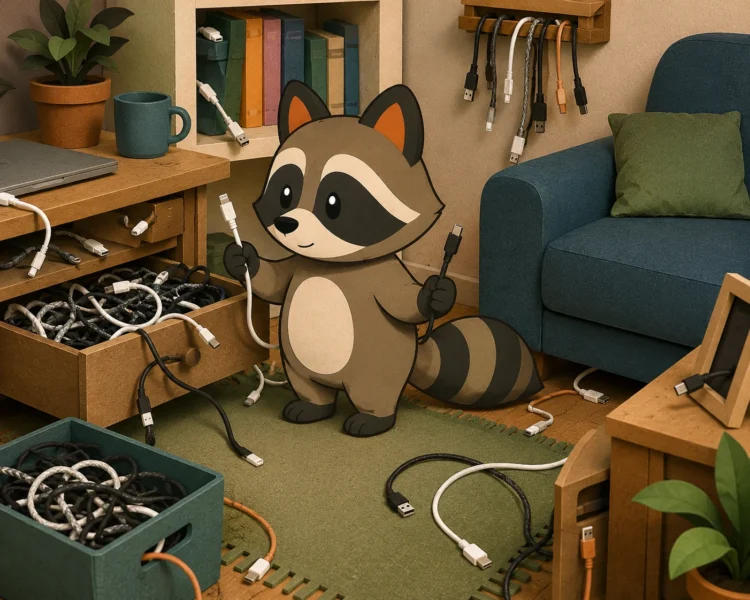
I also have an incredible ability to put something somewhere safe and never see it again.
Right now, I have two pairs of sunglasses that are missing.
I know they’re here.
I know I probably put them somewhere specifically because I didn’t want to lose them.
I bought another pair.
Hopefully the other two eventually show up.
And tasks?
Forgetting tasks once they’re no longer in front of me might actually be my specialty.
If any of this sounds familiar, you’re probably familiar with the phrase out of sight, out of mind.
And if you have ADHD, that phrase might describe a frustrating amount of your everyday life.
What Does “Out of Sight, Out of Mind” Mean With ADHD?
For some people with ADHD, things become much easier to forget when they’re no longer visible or demanding attention.
Think about it.
You buy groceries, put them away, and forget what you bought.
You read a text message, tell yourself you’ll respond later, and never do.
You put an important document somewhere safe.
Good luck finding it.
Or you remember something you need to do, get distracted, and completely forget about it again.
It’s not that you don’t care about these things.
They just stop being at the front of your mind.
ADHD can make it harder to keep track of information, remember responsibilities, and follow through on intentions.
And when something isn’t reminding you of a task or object, it can be easier for your attention to move somewhere else.
Is “Out of Sight, Out of Mind” an ADHD Trait?
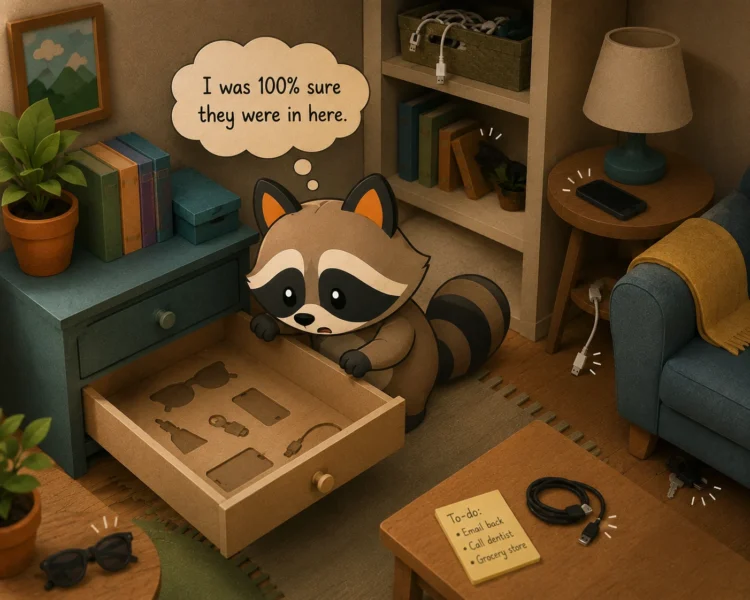
Yes, this experience can be related to ADHD.
Forgetfulness, losing things, difficulty staying organized, and trouble following through on tasks are all common ADHD difficulties.
For some people, those problems become especially noticeable when something is no longer visible.
That might mean forgetting about food in the refrigerator, losing track of something you put away, or remembering a task only after someone mentions it.
The CDC’s explanation of ADHD symptoms includes forgetfulness, losing things, and difficulties completing tasks.
Of course, everyone forgets things occasionally.
What matters is whether these difficulties happen frequently enough to interfere with everyday life.
Why Does ADHD Make Things Easier to Forget?
There’s more than one reason this can happen.
ADHD affects attention and executive functioning, which includes the mental skills we use to manage information, organize tasks, and follow through on what we intend to do.
Two kinds of memory are especially useful for understanding the experience.
Working Memory: Keeping Something in Mind
Working memory helps you hold information in your mind while you’re using it.
For example:
- Remembering why you walked into another room.
- Keeping track of instructions while completing a task.
- Remembering where you just put something.
- Holding onto a thought while someone is talking.
Working memory can be harder to manage with ADHD.
A research review examining working memory in adults with ADHD found that adults with ADHD often performed worse on working-memory tasks than adults without ADHD.
That can help explain why information sometimes slips away when your attention moves elsewhere.
Here’s where my bananas come in.
The bananas sitting on my table don’t require me to remember that I bought bananas.
I see them.
I remember them.
Maybe I eat one.
The fruit inside the refrigerator drawer?
That’s relying on me to remember it without a reminder.
And apparently, that’s a dangerous game.
Sometimes seeing something is the reminder you need.
Prospective Memory: Remembering to Do Something Later
Don’t let the name scare you.
Prospective memory simply means remembering to do something you planned to do later.
Like remembering to:
- Call someone after work.
- Move the laundry into the dryer.
- Send an email.
- Attend an appointment.
- Pick something up on your way home.
It’s different from remembering something that already happened.
It’s remembering an intention at the right moment.
Research has also examined prospective-memory difficulties in adults with ADHD.
Here’s a simple example.
You remember that you need to respond to an email.
But you’re busy.
So you decide to do it later.
Then you move on to something else.
Hours pass.
The email is completely forgotten.
You didn’t necessarily forget that someone contacted you.
You forgot to carry out the intention.
And sometimes, as I’ve experienced myself, remembering isn’t even the hardest part.
Sometimes I Remember. I Just Can’t Get Myself to Do It.
Here’s something else that happens to me.
Sometimes I actually remember what I’m supposed to do.
And sometimes it’s something I genuinely want to do.
The problem?
Getting myself to do it feels like too much effort.
So I put it off.
Eventually, I forget about it again.
That’s what makes this so frustrating.
Sometimes I forget because something isn’t in front of me.
Other times, I remember perfectly well.
I just can’t seem to get myself started.
And by the time I’m ready to do something about it, the thought has disappeared again.
This is where the experience becomes more complicated than simply having a bad memory.
Because remembering a task and actually starting it are two different things.
ADHD can affect both.
Difficulty getting started can be connected to executive-function challenges, which can make it harder to begin tasks even when you genuinely want to complete them.
And when you feel stuck despite knowing exactly what you need to do, that can overlap with what’s commonly called ADHD paralysis.
For me, forgetting something and putting something off can become part of the same cycle.
I remember.
I don’t start.
I forget again.
Why Seeing Things Can Make Them Easier to Remember
I’ve started thinking about visibility differently.
Sometimes leaving something where I can see it is more useful than putting it away.
Not because I don’t know where it belongs.
But because seeing it reminds me that it’s there.
Think about the bananas again.
They’re sitting on the table.
I walk past them.
There’s my reminder.
The refrigerator drawer doesn’t work the same way.
Unless I open it, the fruit isn’t reminding me of anything.
And this applies to more than food.
A calendar you regularly see can remind you about appointments.
A note on your desk can remind you about something you need to finish.
Putting an item near the door can remind you to take it when you leave.
These are called external cues.
That’s just a fancy way of saying your surroundings help remind you of something.
And when remembering everything internally is difficult, those reminders can be useful.
Of course, I’m not suggesting you leave every single thing you own sitting on the kitchen counter.
There’s a difference between making important things visible and turning your house into a storage unit.
The goal is to find a system that works for you.
What “Out of Sight, Out of Mind” Can Look Like in Everyday Life
This experience can show up in all kinds of situations.
You might:
- Buy something you already own because you forgot about the first one.
- Find expired food you genuinely intended to eat.
- Put something somewhere safe and forget where that place was.
- Forget a task after someone interrupts you.
- Read a message and forget to respond.
- Leave laundry sitting in the washer.
- Miss appointments unless you have reminders.
- Remember something the moment you see it again.
- Forget about something you wanted to do because it wasn’t in front of you.
- Remember a task, put it off because starting feels difficult, and then forget again.
These things can happen to anyone.
But when they happen repeatedly and interfere with everyday life, they may be part of a larger pattern worth understanding.
If you’re wondering what else clinicians look for, I’ve explained the 18 recognized ADHD symptoms in another article.
Why “Just Remember” Isn’t Particularly Helpful
This is the part that used to frustrate me.
If remembering were reliable, I wouldn’t need the reminder.
Telling myself:
Don’t forget this.
Feels very convincing at the moment.
Future me apparently wasn’t included in that conversation.
So instead of expecting my brain to remember everything, I try to use things outside my head to help.
Here are a few approaches worth trying.
1. Keep Important Things Visible
If you regularly forget something because it’s hidden, consider keeping it somewhere you’ll see it.
For example, use a clear container for fruit instead of putting it in an opaque drawer.
Or keep frequently used items in a designated spot where they’re easy to notice.
The idea isn’t to leave everything out.
It’s to make the things you tend to forget easier to remember.
2. Put Reminders Where You’ll Need Them
A reminder works best when you encounter it at the right moment.
If you need to take something to work, put it near the door.
If you need to complete a task when you get home, set a reminder for when you’re actually home.
A reminder that appears hours before you can act may be forgotten by the time you need it.
3. Give Important Things One Home
Remember my missing sunglasses?
I’m pretty sure I put them somewhere safe.
The problem is that I apparently have too many safe places.
Having one consistent location for important items can make them easier to find.
Keys go here.
Wallet goes there.
Sunglasses go…
Well, hopefully somewhere I’ll remember next time.
4. Make Starting Easier
Sometimes remembering isn’t the problem.
It’s getting yourself to do the task.
If you remember something you want to do but can’t get started, don’t immediately assume you need more motivation.
Sometimes making the task smaller is more useful than trying to convince yourself to do the whole thing.
Instead of:
I need to clean the entire kitchen.
Start with:
I’m going to put away three things.
Instead of:
I need to answer all these emails.
Start with:
I’m going to open one.
A smaller first step won’t solve every difficulty with starting tasks, but it can make the task feel more manageable.
5. Use a System That Reminds You
Calendars.
Phone reminders.
Notes.
Task lists.
Whatever works for you.
The important part is having a way for the information to come back when you need it.
Because a reminder you never see isn’t doing much reminding.
And the greatest organizational system ever invented is useless if you forget the organizational system exists.
6. Automate What You Can
Some things don’t need to depend on remembering.
If you regularly forget a bill, automatic payments might help.
If you keep forgetting a recurring responsibility, set a repeating reminder instead of creating a new one every time.
The fewer things you have to remember manually, the fewer opportunities there are to forget them.
Of course, automatic payments still require enough money in the account and occasional checks to make sure everything is working.
I Still Want Those Glasses
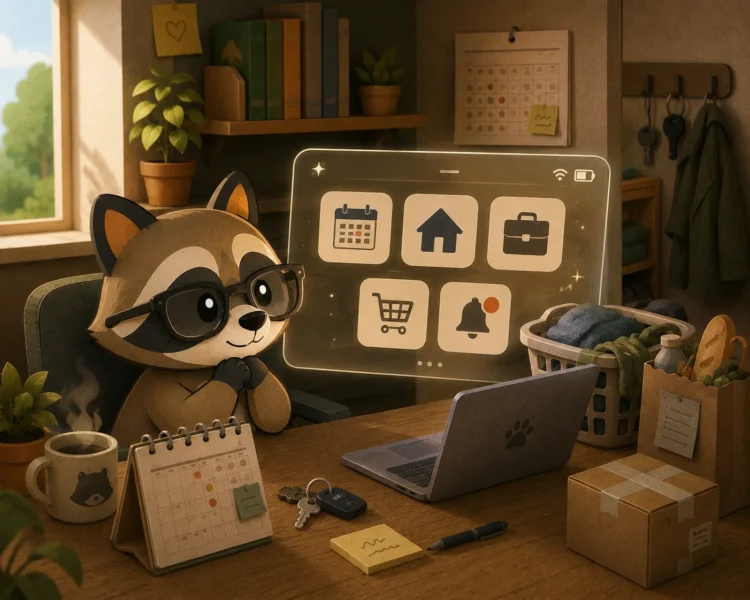
I keep thinking someone is eventually going to build the perfect version of this.
A normal-looking pair of glasses with a screen only you can see.
Everything you need to remember sitting somewhere in your field of view.
Work.
Home.
Appointments.
Things to buy.
Things you’ve been putting off.
You look at a category and everything you need appears.
Basically an external working-memory system floating in front of your face.
Whoever gets that right is going to make a lot of money.
Until then, I have calendars.
Reminders.
Notes.
Apps.
Visible objects.
And apparently 42 charging cables.
Out of Sight Doesn’t Have to Mean Forgotten
I don’t think the solution is simply trying harder to remember.
Sometimes it’s about changing the environment.
Making things easier to see.
Using reminders that appear when you need them.
And making the first step small enough that getting started doesn’t feel like such a big deal.
Because I don’t need another lecture about remembering things.
I need something that actually helps me remember.
Preferably before the fruit in my refrigerator turns into a science experiment.