
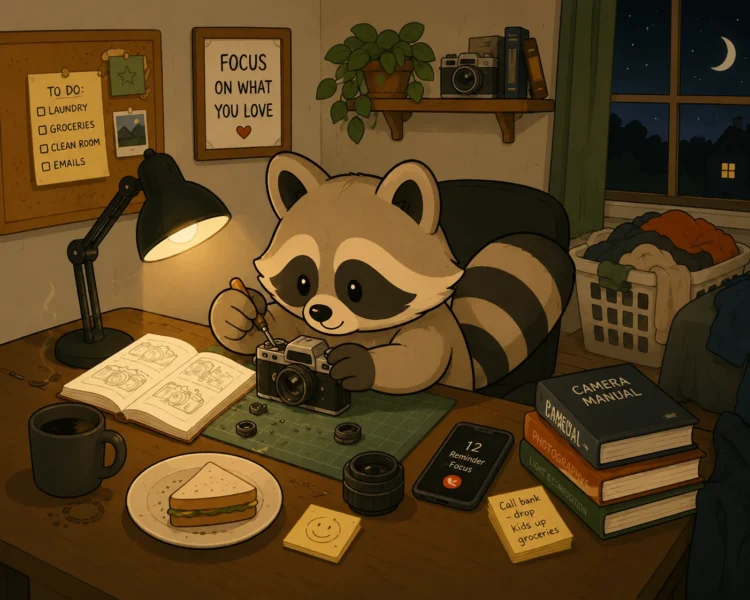
Every once in a while, something grabs your attention so completely that the rest of the world seems to disappear.
Maybe it’s a new hobby.
Maybe it’s a TV show you can’t stop binge watching.
Maybe it’s learning everything there is to know about sourdough bread, ants, fantasy football, or the history of Ancient Rome.
You tell yourself you’ll spend twenty minutes looking into it.
Then you glance at the clock.
It’s been four hours.
You forgot to eat.
You never answered the text message your friend sent this morning.
The laundry is still sitting in the washing machine.
And somehow you’ve read twelve articles, watched seventeen videos, and have three browser tabs open comparing products you weren’t even interested in yesterday.
People often describe ADHD as having trouble paying attention.
But if you’ve ever experienced something like this, you know that isn’t the whole story.
Sometimes ADHD isn’t about not paying attention.
It’s about paying attention so intensely to one thing that everything else fades into the background.
That experience is commonly called hyperfixation.
For many people with ADHD, it can feel exciting, productive, frustrating, exhausting, or all four at the same time.
Understanding why it happens can help you recognize when hyperfixation is working for you, when it’s working against you, and how to find a healthier balance.
Quick Answer
ADHD hyperfixation is an intense, persistent focus on a specific interest, activity, or topic that becomes difficult to shift away from. Although hyperfixation is not an official symptom listed in the DSM-5, many clinicians and adults with ADHD recognize it as a common experience related to differences in attention regulation. Hyperfixation can lead to deep learning and creativity, but it can also cause people to lose track of time, neglect responsibilities, and experience burnout if left unmanaged.
Key Takeaways
- Hyperfixation is commonly experienced by many people with ADHD, even though it is not an official DSM-5 symptom.
- ADHD is better understood as a difference in attention regulation than simply a lack of attention.
- Hyperfixation often develops around activities that are novel, rewarding, emotionally meaningful, or highly interesting.
- It can contribute to creativity, expertise, and problem-solving.
- It can also interfere with sleep, relationships, work, and everyday responsibilities.
- Learning to recognize the signs early can make hyperfixation easier to manage without losing its benefits.
If This Sounds Familiar…
Hyperfixation can look different from person to person, but many adults with ADHD recognize experiences like these:
- You planned to spend fifteen minutes researching something, but several hours disappeared without you noticing.
- You become so absorbed in a project that you forget to eat, drink water, or use the bathroom.
- Friends or family have to repeat your name several times before you realize they’re talking to you.
- One topic dominates your thoughts for days or even weeks.
- Everything else suddenly feels boring compared to your current interest.
- You lose sleep because your brain keeps telling you, “Just one more video.”
- You spend far more money than you intended on a new hobby or interest.
- When the excitement eventually fades, you may have little interest in finishing what you started.
If you’re nodding your head while reading this, you’re not alone.
Many adults with ADHD describe hyperfixation as one of the most confusing parts of living with the condition. It can make you feel incredibly productive one week and completely stuck the next.
Why Does ADHD Hyperfixation Happen?
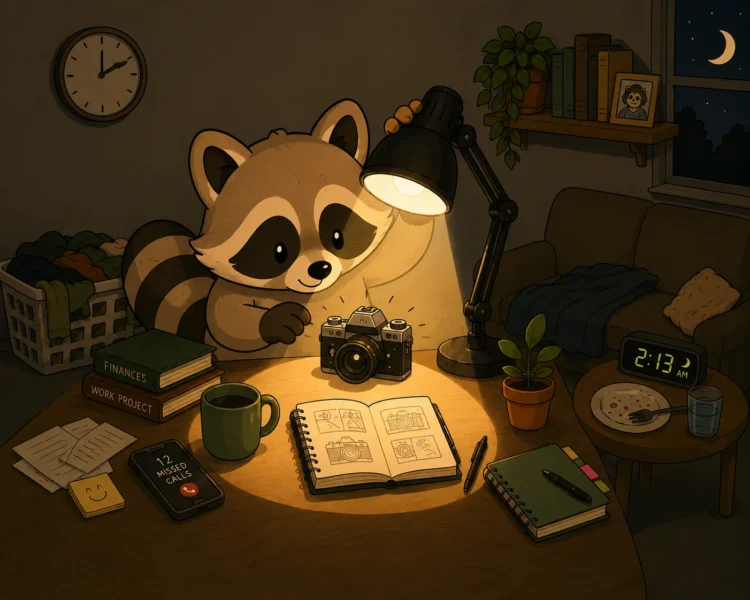
If you’ve ever wondered why your brain can spend six straight hours researching sourdough bread baking but struggles to spend six minutes answering emails, you’re asking one of the biggest questions in ADHD.
The short answer is that ADHD doesn’t affect how much attention you have.
It affects how your attention is regulated.
Imagine your attention as a spotlight.
It can shine incredibly brightly, but only on a small part of the room at a time. Everything else is still there,
it just faces into the background while the spotlight stays fixed on what has captured your interest.
That’s an important difference.
People often think ADHD means you can’t focus.
But many adults with ADHD know that’s not true.
Sometimes you can’t focus at all.
Other times, you can focus so intensely that the outside world practically disappears.
Researchers are still working to fully understand why this happens, but several factors appear to play a role.
ADHD Is About Regulating Attention, Not Simply Paying Attention
Think back to the spotlight analogy.
For many people without ADHD, attention is like a flashlight they can point where they need it.
Need to answer emails?
The spotlight moves.
Need to pay bills?
It moves again.
Need to help your child with homework?
No problem.
With ADHD, moving that spotlight isn’t always so simple.
Sometimes it jumps from one thing to another before you’ve finished.
Other times…
It locks onto something interesting and refuses to budge.
That’s where hyperfixation often begins.
The challenge isn’t that your brain can’t pay attention.
The challenge is that it doesn’t always let you decide what deserves your attention.
Interest Changes Everything
One of the most consistent observations in ADHD research is that attention isn’t distributed evenly.
Activities that feel:
- novel
- challenging
- emotionally meaningful
- personally rewarding
- urgent
often hold attention much more easily than tasks that feel repetitive or routine.
That’s why someone with ADHD might struggle to fold laundry but spend an entire afternoon learning how to build the perfect mechanical keyboard or researching the history of Formula 1.
It isn’t because one task is objectively harder.
It’s because your brain responds differently depending on how engaging the activity feels.
Dopamine Is Part of the Story…But Not the Whole Story
You’ll often hear people say that hyperfixation happens because of dopamine.
There’s some truth to that, but it’s also an oversimplification.
Dopamine is a neurotransmitter involved in motivation, reward, learning, and attention. Differences in dopamine signaling are believed to play an important role in ADHD.
When something feels exciting, new, or personally meaningful, your brain may be more motivated to keep returning to it.
That helps explain why certain interests can feel almost magnetic.
But dopamine doesn’t work alone.
Attention regulation involves multiple brain networks working together, and researchers are still learning exactly how those systems interact in ADHD.
So while dopamine is part of the explanation, it isn’t the entire explanation.
Hyperfixation Isn’t a Choice
One of the most frustrating parts of hyperfixation is that people often assume it’s intentional.
“You chose to ignore me.”
“You could have stopped if you wanted to.”
“Why didn’t you just take a break?”
If only it were that easy.
Most adults with ADHD don’t describe hyperfixation as making a conscious decision to ignore everything else.
Instead, they describe realizing, sometimes hours later, that they never noticed how much time had passed.
That’s an important distinction.
Hyperfixation isn’t about caring less about your responsibilities.
It’s about your attention becoming so absorbed by one thing that shifting away from it becomes unexpectedly difficult.
That doesn’t mean ADHD removes personal responsibility.
But understanding what’s happening can make it easier to recognize the pattern, put strategies in place, and reduce the impact on your daily life.
Hyperfixation vs. Hyperfocus
If you’ve spent any time reading about ADHD online, you’ve probably seen the terms hyperfixation and hyperfocus used almost interchangeably.
That can be confusing because different people mean different things.
Some clinicians use the two terms as synonyms.
Others make a distinction between them.
At the moment, there isn’t a universally accepted scientific definition that clearly separates one from the other.
Rather than getting caught up in the terminology, it helps to think about the two experiences this way.
Hyperfixation is usually about what your mind keeps returning to.
Hyperfocus is about how intensely you’re concentrating in the moment.
The two often happen together, but they aren’t necessarily the same thing.
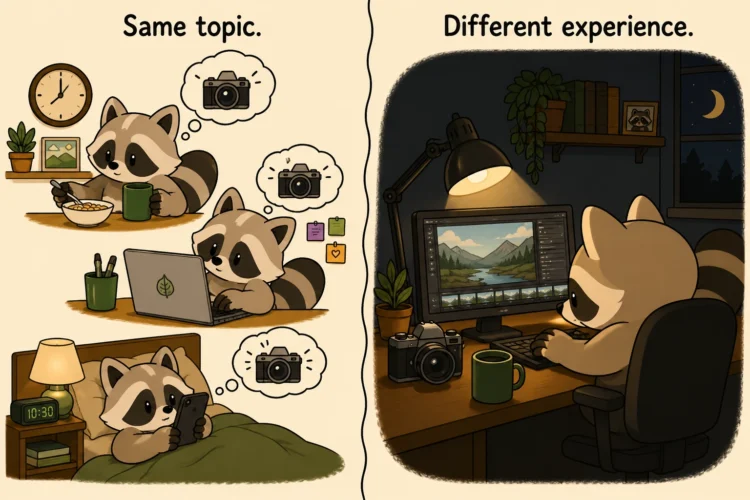
For example, you might become hyperfixated on photography.
For several weeks, it’s all you think about.
You watch YouTube videos while eating breakfast.
You compare cameras during your lunch break.
You read photography forums before bed.
Photography has become your brain’s favorite subject.
Then one Saturday afternoon, you spend five uninterrupted hours editing photos without noticing the time.
That intense period of concentration is hyperfocus.
The ongoing mental attachment to photography is hyperfixation.
One often leads to the other, but not always.
Hyperfixation vs. Hyperfocus at a Glance
| Hyperfixation | Hyperfocus |
|---|---|
| An ongoing mental attachment to a person, topic, hobby, or interest. | A period of intense concentration on a task or activity. |
| Can last days, weeks, or even months. | Usually lasts until attention is interrupted or naturally shifts. |
| Your thoughts repeatedly return to the same subject. | Your attention is deeply absorbed in what you’re doing right now. |
| Can happen even when you’re not actively engaging with the interest. | Happens while you’re actively performing an activity. |
| May lead to repeated episodes of hyperfocus. | Doesn’t always involve an ongoing hyperfixation. |
They Often Feed Each Other
For many people with ADHD, these experiences overlap.
You become fascinated by something.
The more you learn, the more interesting it becomes.
The more interesting it becomes, the easier it is to spend hours focused on it.
That deeper focus helps you discover even more.
Before long, you’ve created a cycle that keeps reinforcing itself.
It’s one reason ADHD can produce remarkable expertise in subjects people genuinely love.
It’s also one reason people suddenly realize they’ve spent an entire weekend researching air fryers instead of doing the chores they planned.
Neither experience is inherently good or bad.
Both are examples of how ADHD can make attention incredibly powerful, but sometimes difficult to direct.
What Does ADHD Hyperfixation Feel Like?
Hyperfixation isn’t just spending a long time doing something you enjoy.
It’s the feeling that one thing has quietly moved to the front of your mind, and keeps finding its way back there.
Even when you’re trying to focus on something else.
You might be at work, but your brain is thinking about the new hobby you picked up last week.
You might be watching TV with your partner while mentally planning your next project.
You might wake up in the morning already thinking about it before your feet even hit the floor.
It’s almost like your brain has a favorite tab open in the background all day.
No matter what you’re doing, it keeps switching back to it.
It Can Feel Like Your Brain Has a Default Setting
Imagine opening your web browser.
No matter what website you try to visit, one tab keeps pulling your attention back.
You close it.
A few minutes later, you’re back on it.
Not because you consciously decided to.
Because your brain keeps saying,
“Wait…before we do anything else, let’s check one more thing.”
For some people, that “one more thing” happens a dozen times.
For others, it happens hundreds.
Time Starts to Work Differently
One of the most common experiences people describe is losing track of time completely.
You tell yourself:
“I’ll just watch one video.”
Then another.
Then another.
Suddenly it’s dark outside.
You haven’t eaten lunch.
Your coffee is cold.
Your phone battery is at 3%.
And you’re genuinely surprised that six hours disappeared.
If this sounds familiar, you’re not imagining it.
Many adults with ADHD also experience time blindness, making it much harder to notice the passage of time while deeply engaged in something.
Everything Else Gets Quieter
When hyperfixation takes over, the interesting thing isn’t just that one activity becomes louder.
It’s that everything else becomes quieter.
The dirty dishes?
They fade into the background.
The email you’ve been meaning to answer?
Out of sight.
The laundry?
Tomorrow, or another day, we’ll see…
Your brain isn’t necessarily deciding those things don’t matter.
They’re simply struggling to compete for your attention.
That’s one reason people with ADHD often feel guilty afterward.
They weren’t intentionally ignoring responsibilities.
Their attention became so concentrated that everything else temporarily lost priority.
It Can Be Incredibly Rewarding…
There are moments when hyperfixation feels amazing.
You learn faster.
Ideas connect effortlessly.
Hours of practice don’t feel like work.
Some people discover lifelong careers because they became deeply fascinated by a subject.
Others develop remarkable skills because they naturally spend hundreds of enjoyable hours learning.
This ability to dive deeply into something meaningful can become one of ADHD’s greatest strengths.
…Until It Isn’t
The same experience that helps you master a skill can also leave you wondering:
“Why didn’t I answer those messages?”
“How is it already 2:00 in the morning?”
“Did I seriously forget to eat again?”
“I was supposed to pick up groceries…”
Hyperfixation rarely announces when it’s becoming a problem.
Most people realize it only after they finally step out of it.
That’s why awareness matters so much.
The goal isn’t to stop caring deeply about the things you love.
It’s learning to notice when your spotlight has become so narrow that the rest of your life is disappearing outside its beam.
What Can People With ADHD Hyperfixate On?
One of the biggest misconceptions about hyperfixation is that it only happens with hobbies.
In reality, almost anything can become the focus of a hyperfixation.
It’s less about what captures your attention and more about how strongly your brain attaches to it.
For one person, it might be learning everything about astronomy.
For someone else, it might be reorganizing the kitchen, training for a marathon, or trying to find the perfect espresso machine.
The subject itself isn’t what matters.
It’s the intensity of the interest.
Here are some of the most common types of hyperfixation people with ADHD describe.
Hobbies and Creative Interests
This is probably the example most people think of first.
You discover a new hobby and suddenly it’s all you want to do.
You spend hours watching tutorials.
You buy equipment.
You read reviews.
You join online communities.
You imagine yourself doing it for years.
Then…
Weeks or months later…
Your interest fades almost as quickly as it arrived.
That doesn’t mean the hobby was fake.
It simply means your brain’s spotlight moved somewhere else.
If this pattern sounds familiar, we’ve written an entire article about why people with ADHD often become deeply interested in hobbies before suddenly losing interest.
Learning and Research
Many adults with ADHD become fascinated by learning.
Not because someone assigned it.
Because they genuinely want to understand something.
One question quickly turns into another.
Before long you’ve opened twenty browser tabs.
You’re reading scientific papers.
Watching documentaries.
Comparing opinions.
Taking notes.
And suddenly you know more about that topic than anyone around you expected.
Learning itself becomes rewarding.
Television, Movies, Books, and Fictional Worlds
Sometimes hyperfixation isn’t about learning.
It’s about escaping into a story.
You finish an entire television series in a weekend.
You memorize quotes.
You read fan theories.
You follow the actors.
You listen to podcasts about the show.
You find yourself thinking about the characters long after the credits roll.
For a while, that fictional world feels just as engaging as the real one.
Video Games
Video games are another common source of hyperfixation because they combine many things that naturally hold attention:
- Clear goals
- Immediate feedback
- Constant rewards
- Novelty
- Progress
- Challenge
For many people with ADHD, that combination makes games incredibly engaging.
The challenge isn’t enjoying games.
It’s recognizing when “just one more match” quietly turns into three more hours.
People and Relationships
Hyperfixation doesn’t always involve activities.
Sometimes it’s a person.
You may find yourself thinking about someone throughout the day.
Replaying conversations.
Wondering what they meant by a text.
Looking forward to seeing them again.
Wanting to learn everything about them.
This doesn’t automatically mean something is unhealthy.
Strong excitement about a new relationship is common for many people, with or without ADHD.
But if thoughts about one person begin interfering with work, sleep, or daily life, it may be worth stepping back and noticing whether your attention has become unusually difficult to shift.
Health, ADHD, and Self-Improvement
Ironically, many adults become hyperfixated on ADHD after they’re diagnosed, or after they begin to suspect they might have it.
You start by reading one article.
Then another.
Then you discover podcasts.
Books.
Scientific studies.
Online communities.
Before long, ADHD becomes the lens through which you’re trying to understand your entire life.
That’s not necessarily a bad thing.
For many people, it’s the first time their experiences begin to make sense.
Over time, however, it’s healthy for ADHD to become part of your life rather than the only thing your mind wants to think about.
Everyone’s Hyperfixations Look Different
There isn’t a list of “normal” hyperfixations.
Some people become fascinated by history.
Others by cooking.
Plants.
Cars.
Birds.
Fantasy football.
Programming.
Photography.
Fitness.
Music.
Collecting.
Languages.
Space.
Or something completely unexpected.
The common thread isn’t the topic.
It’s the feeling that your brain keeps coming back to it, even when you intended to be doing something else.
The Benefits of ADHD Hyperfixation
After reading this far, you might be thinking that hyperfixation sounds entirely negative.
It isn’t.
In fact, many adults with ADHD credit hyperfixation with helping them develop some of their greatest strengths.
The challenge isn’t that hyperfixation exists.
The challenge is learning when it’s helping you and when it’s quietly taking over.
You Can Learn Faster
When something genuinely captures your interest, learning often stops feeling like work.
Instead of forcing yourself to study, you’re driven by curiosity.
You ask one question.
Then another.
Then another.
Before you realize it, you’ve spent hours connecting ideas that other people might never have explored.
That kind of deep curiosity can lead to an impressive understanding of a subject in a relatively short amount of time.
You Can Develop Real Expertise
Many people become highly skilled because they spend hundreds, or even thousands of hours immersed in something they love.
Artists.
Programmers.
Photographers.
Musicians.
Writers.
Designers.
Mechanics.
Scientists.
Gamers.
Woodworkers.
Entrepreneurs.
Hyperfixation often provides something that’s difficult to manufacture:
The desire to keep learning long after most people would have stopped.
While not everyone turns a hyperfixation into a career, it’s not uncommon for people with ADHD to build meaningful skills through repeated periods of deep interest.
Creativity Often Thrives
Hyperfixation doesn’t just help people collect information.
It can also help them make unexpected connections.
When your brain spends a great deal of time exploring one subject, it’s more likely to notice patterns, relationships, and ideas that other people might overlook.
That doesn’t mean every person with ADHD is automatically creative.
But for many, sustained interest creates the conditions where creativity can flourish.
Complex Problems Become Easier to Solve
Have you ever looked up from your computer and realized you’ve spent three hours solving a problem without noticing the time?
When hyperfixation aligns with something important, it can produce remarkable persistence.
Instead of giving up after the first obstacle, your brain keeps exploring different possibilities.
Sometimes that’s exactly what’s needed to solve a difficult problem.
It Can Lead to Purpose
Many adults with ADHD eventually discover that some of the interests they’ve hyperfixated on weren’t temporary at all.
They became careers.
Businesses.
Lifelong hobbies.
Ways of helping other people.
Some of the world’s best teachers, engineers, artists, healthcare professionals, researchers, and entrepreneurs didn’t become experts because someone forced them to practice.
They became experts because they couldn’t stop learning.
Hyperfixation was part of that journey.
The Goal Isn’t to Get Rid of Hyperfixation
It’s understandable to want hyperfixation to disappear after it causes missed deadlines or another late night.
But the goal usually isn’t to eliminate it completely.
The same ability that causes you to lose track of time can also help you create, invent, build, learn, and master difficult skills.
Instead of asking,
“How do I stop hyperfixating?”
A more helpful question is often,
“How can I enjoy the benefits without letting it take over the rest of my life?”
That’s where awareness, routines, and practical strategies become important.
We’ll look at those shortly.
The Hidden Costs of Hyperfixation

Hyperfixation often doesn’t feel like a problem while you’re in it.
In fact, it can feel incredibly productive.
You’re learning.
Building.
Creating.
Solving problems.
Making progress.
The difficulties usually become obvious afterward.
You look up from your computer and realize it’s midnight.
Or you notice the pile of dishes that’s been sitting in the sink all day.
Or someone asks why you never answered their text message.
Hyperfixation rarely announces when it’s becoming unhealthy.
It quietly pushes everything else a little farther into the background.
Over time, those small moments can add up.
Sleep Often Becomes the First Casualty
One more chapter.
One more YouTube video.
One more level.
One more article.
One more product review.
If you’ve experienced hyperfixation, you’ve probably said “just five more minutes” more than once.
Those five minutes have a habit of turning into another hour.
Or three.
Many adults with ADHD describe staying awake far later than they intended because they couldn’t find a good stopping point.
The next morning arrives anyway.
Now you’re exhausted.
Your executive functioning is worse.
Your emotional regulation is harder.
And it becomes even easier to hyperfixate again.
It’s a cycle many people recognize.
If sleep has become an ongoing struggle, you may also relate to our article on ADHD and Sleep Deprivation.
Responsibilities Don’t Disappear, They Wait
One of the hardest parts about hyperfixation is that everyday responsibilities don’t stop while you’re deeply engaged in something else.
Bills still need to be paid.
Laundry still needs to be folded.
Appointments still happen.
Emails still arrive.
The challenge isn’t that you don’t care about those things.
It’s that they temporarily lose the competition for your attention.
Then, when you finally notice them again, it can feel overwhelming trying to catch up.
For many adults with ADHD, this creates a familiar pattern:
“I’ll do it after I finish this.”
Then…
“I’ll do it tomorrow.”
Eventually…
“I can’t believe I forgot again.”
That experience overlaps closely with executive dysfunction and ADHD paralysis, where knowing what needs to be done isn’t the same as being able to shift your attention toward it.
Relationships Can Be Affected Too
Hyperfixation doesn’t only affect your schedule.
It can affect the people around you.
Imagine you’re having dinner with your partner.
They’re talking about their day.
Meanwhile, your brain keeps drifting back to the project you’re excited about.
You aren’t trying to ignore them.
You genuinely want to listen.
But your attention keeps wandering back to the thing that’s been occupying your mind all day.
Other times, friends or family may notice that every conversation seems to come back to your newest interest.
You aren’t trying to dominate the conversation.
You’re simply excited.
Unfortunately, excitement and intention don’t always look the same from the outside.
That’s one reason open communication can be so important in relationships affected by ADHD.
Hyperfixation Can Become Expensive
Sometimes the cost isn’t measured in time.
It’s measured in money.
A new hobby starts with one purchase.
Then another.
Then an upgraded version.
Accessories.
Books.
Courses.
Storage bins.
Specialized tools.
Suddenly you’ve spent hundreds or even thousands of dollars before realizing the excitement has started to fade.
Many adults with ADHD recognize this pattern immediately.
It’s one of the many ways hyperfixation can contribute to what’s often called the ADHD Tax, the extra financial costs that can come from impulsive decisions, forgotten subscriptions, abandoned hobbies, or unfinished projects.
Burnout Doesn’t Always Come From Work
When people hear the word burnout, they often think about stressful jobs.
But burnout can also happen after long periods of intense mental effort without enough rest.
Hyperfixation sometimes encourages exactly that.
You skip breaks.
Forget meals.
Stay up late.
Push yourself because stopping feels harder than continuing.
Eventually your brain, and your body, begin asking for recovery.
That’s one reason many people cycle between periods of intense productivity and periods where they feel mentally exhausted.
If that sounds familiar, you may also relate to our article on ADHD Burnout.
The Guilt Can Be Heavy
Perhaps the hardest part isn’t the lost sleep or the unfinished chores.
It’s what you tell yourself afterward.
“Why can’t I just stop?”
“Everyone else seems able to balance things.”
“What’s wrong with me?”
Those thoughts can be painful.
But they also miss something important.
Hyperfixation isn’t a character flaw.
It isn’t laziness.
It isn’t a lack of caring.
It’s one way ADHD can affect attention regulation.
That doesn’t remove personal responsibility.
But it does replace shame with understanding.
And understanding is usually the first step toward finding strategies that actually work.
Awareness Is More Powerful Than Perfection
The goal isn’t to never hyperfixate again.
That’s probably unrealistic.
Instead, the goal is to notice it sooner.
To recognize when your spotlight has narrowed.
To ask yourself:
“Am I choosing to stay here…or has my attention quietly chosen for me?”
That simple question can create just enough space to make a different decision.
Not every time.
But more often than before.
How to Manage Hyperfixation Without Losing What Makes It Special

Hyperfixation isn’t something you simply decide to stop doing.
If it were that easy, you probably wouldn’t be reading this article.
The goal isn’t to eliminate your ability to become deeply interested in something.
That curiosity, creativity, and enthusiasm are valuable.
Instead, the goal is to keep hyperfixation from quietly taking over the parts of your life that matter just as much.
Here are a few strategies that many people with ADHD find helpful.
Learn to Recognize Your Early Warning Signs
Hyperfixation usually doesn’t begin all at once.
It builds gradually.
The earlier you recognize it, the easier it becomes to manage.
Ask yourself:
- Am I thinking about this constantly?
- Have I skipped meals today?
- Have I ignored messages for hours?
- Am I telling myself “just five more minutes” over and over?
- Have I lost track of time several times this week?
These aren’t signs that you’ve failed.
They’re simply clues that your spotlight may be narrowing.
Awareness doesn’t instantly solve the problem, but it gives you the opportunity to make a different choice before hours disappear.
Build Stopping Points Into Your Routine
One reason hyperfixation can last so long is that many activities don’t have a natural ending.
There’s always another article to read.
Another level to beat.
Another product review.
Another video.
Instead of relying on motivation to stop, create stopping points before you begin.
For example:
- Decide you’ll stop after one chapter instead of “when you’re done reading.”
- Work until a timer goes off, then take a short break.
- Finish one specific task instead of chasing “just one more thing.”
Having a planned exit makes it easier to shift your attention than trying to stop in the middle of an endless activity.
Take Care of Your Future Self First
Before diving into something you know might capture your attention, ask yourself one question:
“What will Future Me wish I had already done?”
Maybe it’s eating lunch.
Filling your water bottle.
Taking your medication.
Replying to an important email.
Starting the dishwasher.
Walking the dog.
Doing those small tasks first means you’re less likely to emerge from a hyperfixation hungry, dehydrated, stressed, or overwhelmed.
Think of it as setting your future self up for success before your spotlight gets busy elsewhere.
Let Your Environment Help You
ADHD is often easier to manage when your environment does some of the work for you.
Instead of relying entirely on memory, use external reminders.
That might mean:
- Setting alarms for meals or bedtime.
- Keeping a water bottle within reach.
- Leaving visual reminders where you’ll actually see them.
- Asking a trusted friend or partner to check in with you.
- Using apps that remind you to stand up or take breaks.
These supports aren’t “cheating.”
They’re tools that reduce the amount of mental effort your brain has to spend remembering everything on its own.
Share What You’re Working On
Sometimes another person can notice what you can’t.
If you live with a partner, roommate, or family member, let them know when you’re starting something that tends to pull you in.
Give them permission to gently interrupt you if several hours have passed.
A simple,
“Hey, have you eaten today?”
or
“Didn’t you have somewhere to be this afternoon?”
can be enough to help you step back and reorient yourself.
The goal isn’t to have someone police your behavior.
It’s to have someone help you notice when your attention has become difficult to shift.
Work With Your Brain, Not Against It
Many people spend years trying to force themselves to stop being interested in the things they love.
That usually ends in frustration.
A more realistic approach is learning how your attention works and building your life around that knowledge.
Maybe that means scheduling uninterrupted time for a hobby after you’ve finished your responsibilities.
Maybe it means using your periods of deep focus for work that benefits from creativity or problem-solving.
Maybe it means recognizing that some interests are worth pursuing, while others are more likely to leave you exhausted and behind on everything else.
The goal isn’t perfect balance.
It’s finding a balance that works for you.
Small Adjustments Can Make a Big Difference
You don’t have to completely change the way your brain works.
In fact, you can’t.
But small adjustments, like recognizing your early warning signs, creating stopping points, and preparing your future self can reduce many of the downsides of hyperfixation while preserving the parts that make it meaningful.
Progress isn’t measured by whether you ever hyperfixate again.
It’s measured by whether you’re able to notice it a little sooner, recover a little faster, and make choices that better reflect what matters to you.
When Should You Seek Professional Help?
Hyperfixation isn’t automatically a sign that something is wrong.
Many people with ADHD experience periods of deep interest that are enjoyable, productive, and don’t cause significant problems.
The concern is less about whether you hyperfixate and more about how much it affects your life.
It may be worth talking with a healthcare professional if hyperfixation regularly:
- Causes you to miss work, school, or important responsibilities.
- Leads to chronic sleep deprivation.
- Creates conflict in your relationships.
- Results in significant financial problems.
- Makes it difficult to meet your basic needs, such as eating, drinking enough water, or taking medication.
- Feels impossible to interrupt, even when you desperately want to stop.
- Causes ongoing distress or interferes with your overall quality of life.
A mental health professional can help determine whether hyperfixation is related to ADHD or whether other conditions may also be contributing to what you’re experiencing.
If you’re already being treated for ADHD and feel that hyperfixation is becoming more disruptive, it’s also worth bringing it up with your provider.
Medication, therapy, coaching, or changes to your daily routines may help, depending on your individual situation.
Asking for help isn’t a sign that you’ve failed.
It’s simply another way of learning how your brain works and finding strategies that make everyday life easier.
Final Thoughts
If there’s one thing I hope you take away from this article, it’s this:
Hyperfixation isn’t about a lack of self-control.
It’s about the way ADHD can influence where your attention goes—and how difficult it can sometimes be to bring it back.
That same ability to become deeply absorbed in something can help you build remarkable skills, solve difficult problems, and discover lifelong passions.
It can also make it easier to lose track of time, overlook responsibilities, or neglect your own needs.
Neither experience defines who you are.
Learning to recognize your patterns is what allows you to keep the strengths while reducing the costs.
You don’t have to stop being curious.
You don’t have to stop getting excited about the things you love.
The goal isn’t to make your spotlight disappear.
It’s learning when to gently point it somewhere else.
Frequently Asked Questions
Is hyperfixation an official symptom of ADHD?
No. Hyperfixation is not listed as an official symptom in the Diagnostic and Statistical Manual of Mental Disorders (DSM-5).
However, many clinicians and adults with ADHD recognize it as a common experience. Researchers generally view hyperfixation as one way differences in attention regulation can show up in ADHD, even though it isn’t part of the formal diagnostic criteria.
Is hyperfixation the same as hyperfocus?
Not exactly.
The terms are often used interchangeably, and there isn’t a universally accepted scientific distinction between them.
Many people use hyperfixation to describe an ongoing attachment to a topic or interest, while hyperfocus describes periods of intense concentration on a task.
The two experiences often overlap, but they don’t always occur together.
Can people without ADHD experience hyperfixation?
Yes.
Anyone can become deeply interested in a hobby, project, or topic.
The difference is that, for many people with ADHD, these periods of intense focus may happen more frequently and be much harder to shift away from. They may also have a greater impact on everyday responsibilities.
How long can a hyperfixation last?
There’s no set timeline.
Some hyperfixations last a few hours.
Others last weeks, months, or even years.
Sometimes the interest gradually fades.
Other times it remains a lifelong passion.
The duration varies from person to person and from one interest to another.
Is hyperfixation always a bad thing?
Not at all.
Hyperfixation can lead to deep learning, creativity, expertise, and enjoyment.
The challenge arises when it consistently interferes with sleep, work, relationships, finances, or other important parts of daily life.
Like many ADHD traits, hyperfixation can be both a strength and a challenge.
Can medication reduce hyperfixation?
ADHD medication may help some people regulate their attention more effectively, but it doesn’t eliminate hyperfixation for everyone.
Some people notice that medication makes it easier to shift their attention when needed, while others continue to experience periods of intense focus.
If hyperfixation is causing significant problems, discuss it with your healthcare provider rather than changing or stopping medication on your own.
Is hyperfixation the same as autism’s special interests?
Not necessarily.
People with autism often describe special interests, while people with ADHD may describe hyperfixation.
Although they can appear similar, researchers generally consider them different experiences, and someone can have one without the other.
People who have both ADHD and autism may experience characteristics of both.
Why do I suddenly lose interest in something I loved?
Many adults with ADHD notice that a powerful interest can fade just as quickly as it appeared.
Researchers don’t fully understand why this happens, but changes in novelty, challenge, and reward may all play a role.
Losing interest doesn’t mean you failed.
It’s a common experience for many people with ADHD.
If this pattern happens often with hobbies, you might enjoy our article on Why Do People With ADHD Get Obsessed With Hobbies and Then Suddenly Lose Interest?
Can hyperfixation affect relationships?
Yes.
Hyperfixation can sometimes make it harder to shift your attention toward conversations, household responsibilities, or time with loved ones.
It may also lead you to talk extensively about one topic without realizing others aren’t equally interested.
Open communication and awareness can help reduce misunderstandings.
How do I know if I need help?
If hyperfixation regularly affects your health, relationships, finances, work, or ability to meet your daily responsibilities, it’s worth discussing with a healthcare professional.
You don’t need to wait until things become overwhelming.
Seeking support is simply another way of learning how your brain works and finding strategies that fit your life.
Research & Editorial Standards
Every article on ADHDefined combines lived experience with evidence-informed research. Our goal is to explain ADHD in plain language while accurately reflecting the current scientific understanding.
Personal experiences are included to help readers relate to common ADHD experiences. They are not presented as scientific evidence. When personal experience and current research differ, we prioritize the best available evidence.
While our content is not a substitute for professional medical advice, we develop and review our articles using guidance from trusted organizations, recognized ADHD experts, and peer-reviewed scientific literature whenever appropriate.
Sources
This article was researched and reviewed using guidance from the following organizations and evidence-based resources:
- ADDA (Attention Deficit Disorder Association) — https://add.org
- CHADD (Children and Adults with Attention-Deficit/Hyperactivity Disorder) — https://chadd.org
- National Institutes of Health (NIH) — https://www.nih.gov
- Cleveland Clinic — https://my.clevelandclinic.org