
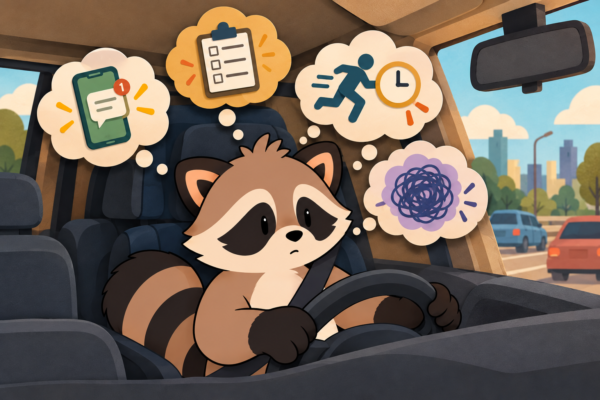
I had my Saturday planned out. I had things to get done, including going to the gym. Nothing complicated. Just a day where I knew what I wanted to accomplish.
Then the dealership took longer than I expected.
That meant less time at the gym, and I was pissed.
Now, getting frustrated when your plans get interrupted isn’t unusual. That happens to everybody. What bothered me was how long I stayed angry.
I knew I was staying mad longer than I should’ve. I recognized it while it was happening. But recognizing it didn’t make the feeling go away.
I kept thinking, Bro, why can’t you just let it go? It’s over.
But I couldn’t.
I spent the rest of the day quietly stewing in my head. I was snapping at people, too. They snapped back, which only made things worse.
What started as an inconvenience ended up affecting my entire day.
And afterward? Embarrassment. Guilt. Not just because I’d snapped at people who didn’t deserve it, but because I couldn’t understand why something so small had gotten me that upset in the first place.
That’s one of the most frustrating parts of emotional dysregulation: knowing you’re overreacting doesn’t necessarily mean you can stop.
And if you have ADHD, there’s a reason this experience might sound familiar.
What Is ADHD Emotional Dysregulation?
ADHD emotional dysregulation is difficulty managing emotional reactions, including how intensely you experience emotions, how you respond to them, and how long it takes to recover.
It might look like getting frustrated over something relatively minor, feeling overwhelmed by disappointment, becoming unusually irritable, or struggling to calm down after an argument.
It’s not necessarily about feeling the wrong emotion. Sometimes the emotion makes perfect sense.
The problem is how difficult it becomes to manage.
Everyone gets angry, frustrated, embarrassed, or overwhelmed. Having strong emotions doesn’t automatically mean someone has emotional dysregulation.
But when those emotions regularly feel difficult to control, last longer than you’d like, or start affecting your relationships and everyday life, there may be more going on.
Is emotional dysregulation actually part of ADHD?
Yes. Emotional regulation difficulties are strongly associated with ADHD, although not everyone with ADHD experiences them.
A 2020 meta-analysis examining 13 studies involving 2,535 participants found that adults with ADHD experienced significantly greater emotional dysregulation than adults without ADHD.
The researchers also found that greater ADHD symptom severity was associated with greater emotional regulation difficulties.
You can read the 2020 meta-analysis published in BMC Psychiatry.
Here’s an important distinction, though.
Emotional dysregulation isn’t one of the official symptoms used to diagnose ADHD under the DSM-5-TR. It’s recognized as an associated feature, and researchers increasingly consider it an important part of understanding ADHD.
That means emotional dysregulation can be connected to ADHD without being something everyone with ADHD experiences.
It also means experiencing emotional dysregulation doesn’t automatically mean you have ADHD.
Why Can’t I Calm Down Even When I Know I’m Overreacting?
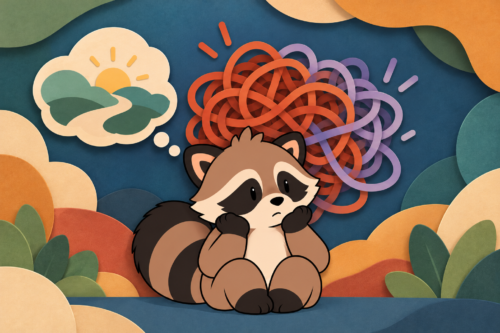
This is the part I’ve struggled to understand.
I wasn’t sitting there thinking the dealership had committed some unforgivable crime. I understood what happened. I understood that staying angry wasn’t helping.
I even recognized that my reaction was making the day worse.
But knowing all of that didn’t make the anger disappear.
And that’s where understanding emotional regulation becomes useful.
Researchers distinguish between two related processes: emotional reactivity and emotional regulation.
Emotional reactivity involves how easily an emotion gets triggered, how strongly you experience it, and how long it lasts.
Emotional regulation involves how you manage that emotion and your response to it.
These processes work together, but they’re not the same thing.
The American Psychological Association explains that emotional difficulties in ADHD can involve both stronger emotional reactions and difficulties regulating those reactions.
In everyday language?
Knowing you’re pissed and being able to stop being pissed are two different things.
ADHD involves difficulties with executive functioning, including skills related to attention, inhibition, and self-regulation. Those difficulties may also contribute to problems managing emotional responses.
But emotional dysregulation isn’t explained by one simple brain mechanism, and researchers are still studying how these processes interact.
What matters here is that recognizing an emotion doesn’t automatically give you immediate control over it.
You might understand perfectly well that something isn’t worth getting upset about and still struggle to move past it.
And sometimes, recognizing that you’re overreacting creates another problem.
You start getting frustrated with yourself for being frustrated.
Now you’re dealing with the original emotion and the frustration of not being able to get rid of it.
That’s exactly what happened to me.
When Your Emotions Start Creating More Problems
Something I’ve noticed about emotional dysregulation is that the original problem isn’t always what ends up causing the most damage.
Sometimes it’s everything that happens afterward.
The dealership taking longer than expected was frustrating, but it wasn’t the end of the world.
What made that Saturday worse was carrying that frustration into the rest of my day.
I was already upset. Then I started snapping at people.
Naturally, they weren’t thrilled about that.
They snapped back.
Now there was more tension, more frustration, and more reasons to be upset.
A small problem triggered a big emotion. I couldn’t shake the emotion. Then the emotion started creating problems of its own.
And that’s something worth paying attention to.
Emotional dysregulation doesn’t always look like an obvious meltdown. Sometimes it’s being unusually quiet because you’re stewing internally. Sometimes it’s becoming impatient with people who haven’t done anything wrong.
Other times, it’s reacting to something before you’ve had a chance to think about how you want to respond.
And it isn’t limited to anger.
Some people experience intense disappointment, sadness, excitement, or emotional reactions to criticism and perceived rejection.
For people who experience rejection sensitivity, a comment or interaction may feel much more painful than expected. But emotional dysregulation is broader than rejection sensitivity alone.
The common thread isn’t one particular emotion.
It’s difficulty managing what happens once that emotion takes hold.
The Guilt Afterward
Eventually, the anger goes away.
But sometimes something else takes its place.
Guilt.
I look back at how I behaved and feel embarrassed.
Why did I get so upset?
Why couldn’t I just let it go?
Why did I let something so small affect the rest of my day?
And why did I take it out on other people?
For me, it’s all of it.
I feel guilty about how I treated people, but I also judge myself for getting that upset in the first place.
And those are two different things.
Feeling guilty because you snapped at someone who didn’t deserve it makes sense. Your actions affected another person, and you’re responsible for that.
But feeling ashamed simply because you experienced an emotion you struggled to regulate is another layer of the experience.
Understanding emotional dysregulation doesn’t mean pretending everything you do while upset is okay.
It doesn’t excuse snapping at people, saying hurtful things, or making everyone around you deal with your frustration.
But understanding what happened gives you something more useful than simply telling yourself to stop being an asshole.
It gives you a pattern you can recognize.
And recognizing that pattern can help you work on how you respond, even when changing how you feel isn’t immediately possible.
What Actually Helps With ADHD Emotional Dysregulation?
I wish recognizing what’s happening automatically made it easier to stop.
Sometimes I can snap out of a bad mood.
Other times, like that Saturday, I can’t.
That’s why I think it’s important to focus on something more realistic than trying to force yourself to stop feeling an emotion.
You might not be able to make the anger disappear immediately, but there are things you can try to keep it from taking over the rest of your day.
Focus on your reaction, not just the emotion
When you’re already upset, trying to convince yourself that you shouldn’t be upset might not get you very far.
Instead, pay attention to what you’re about to do.
Are you about to snap at someone? Send an angry message? Start an argument that has nothing to do with what originally upset you?
If you can recognize that moment, try giving yourself some space before responding.
You don’t have to pretend you’re calm.
You can simply say that you’re frustrated and need a little time.
The goal isn’t to stop feeling angry on command. It’s to avoid creating another problem while you’re angry.
Stop arguing with yourself about how you should feel
There’s a difference between recognizing that an emotion is affecting you and repeatedly criticizing yourself for experiencing it.
I shouldn’t be this angry.
Why am I still thinking about this?
What’s wrong with me?
Sometimes those thoughts become another source of frustration.
Instead of demanding that the feeling disappear, try acknowledging what’s happening.
I’m frustrated. I’m having trouble letting it go. I don’t have to act on that frustration right now.
That doesn’t mean agreeing with every thought that comes with the emotion.
It means giving yourself an opportunity to respond differently without turning the emotion itself into another argument.
Figure out what helps you recover
Sometimes you need to step away from whatever is keeping the frustration going.
That might mean taking a walk, changing your environment, doing something physical, or giving yourself time before returning to a difficult conversation.
What works won’t be identical for everyone.
And something that helps on one occasion might not work as well the next time.
The important thing is to start noticing what actually helps you settle down rather than assuming you should be able to do it through willpower alone.
Repair the damage when you need to
Sometimes you’ll recognize what’s happening early enough to prevent an argument.
Other times, you won’t.
If you’ve snapped at someone, taking responsibility still matters.
An explanation can help someone understand what happened, but it doesn’t replace an apology or make the impact disappear.
You can acknowledge that you were struggling emotionally while also recognizing that someone else didn’t deserve to be treated that way.
And afterward, instead of spending hours criticizing yourself, you can ask a more useful question:
What could I do differently the next time I notice this happening?
Consider professional support
If emotional dysregulation regularly affects your relationships, work, or everyday life, it’s worth discussing with a qualified mental health professional.
Therapies such as cognitive behavioral therapy (CBT) can help adults with ADHD develop strategies for managing thoughts, emotions, and behaviors.
Other approaches that teach emotional awareness, distress tolerance, and regulation skills may also be useful.
A 2023 systematic review published in PLOS ONE found that both medication and behavioral approaches may help with emotional difficulties in adults with ADHD, although more research is needed to determine which interventions work best.
Getting support doesn’t mean you’re incapable of managing your emotions.
It means you’re working on something that’s been difficult to manage on your own.
Does ADHD Medication Help With Emotional Dysregulation?
It can, but there’s something I think people need to understand.
I’m on medication. That doesn’t mean I’m magically cured.
Medication can help with ADHD symptoms, and you can still have days when your emotions get away from you.
That doesn’t automatically mean your medication isn’t working.
Research supports this distinction.
A systematic review and meta-analysis of ADHD medications examined 21 clinical trials and found that several medications improved emotional dysregulation in adults with ADHD.
However, the improvements were generally small to moderate.
In other words, medication can help, but it doesn’t necessarily eliminate emotional regulation difficulties.
And medication responses vary from person to person.
If you’re taking ADHD medication and still experiencing significant emotional difficulties, it’s worth discussing that with your prescriber.
Sometimes treatment needs to be reviewed. Sometimes additional strategies or therapy may help.
The important thing is not to assume that continuing to struggle means you’ve failed or that treatment is automatically ineffective.
Is It ADHD Emotional Dysregulation, Anxiety, or Something Else?
One thing worth understanding is that emotional dysregulation isn’t exclusive to ADHD.
Anxiety, depression, trauma-related conditions, and other mental health difficulties can also affect how people experience and regulate emotions.
And sometimes these conditions overlap.
For example, anxiety may involve persistent worry or anticipation of something going wrong. Depression may involve ongoing changes in mood, motivation, and enjoyment.
Emotional dysregulation describes difficulty managing emotional responses rather than identifying one particular diagnosis.
Someone can experience emotional dysregulation alongside anxiety or depression, with or without ADHD.
That’s why it’s important not to assume that every intense emotional reaction is caused by ADHD.
If your emotional reactions are frequent, unusually intense, significantly different from your usual patterns, or affecting your ability to function, a qualified professional can help you understand what’s contributing to them.
Learning to Recognize the Pattern
Looking back at that Saturday, I can recognize several things.
The dealership taking longer than expected was frustrating.
Staying angry for the rest of the day wasn’t helping.
Snapping at people made things worse.
And afterward, I felt guilty about all of it.
I can acknowledge every one of those things without pretending the anger wasn’t difficult to manage.
That’s what I’m trying to get better at.
Not necessarily preventing myself from ever getting upset, because that’s unrealistic.
But recognizing when an emotion is starting to affect how I treat people and learning to respond before a frustrating moment turns into an entire bad day.
I don’t always get it right.
Sometimes I can move past something relatively quickly. Other times, I struggle.
And medication hasn’t magically changed that.
But understanding emotional dysregulation has helped me put a name to something I used to have trouble explaining.
Sometimes the hardest part isn’t realizing you’re overreacting. It’s knowing you’re overreacting and still struggling to stop.
Research and Further Reading
The following sources support the research discussed in this article:
- American Psychological Association — Emotional Dysregulation and ADHD (2024)
- Beheshti et al. — Emotion Dysregulation in Adults With ADHD: A Meta-Analysis (2020)
- Soler-Gutiérrez et al. — Evidence of Emotion Dysregulation as a Core Symptom of Adult ADHD (2023)
- Lenzi et al. — Pharmacotherapy of Emotional Dysregulation in Adults With ADHD (2018)