
Can ADHD Cause Depression? When ADHD Starts Wearing You Down
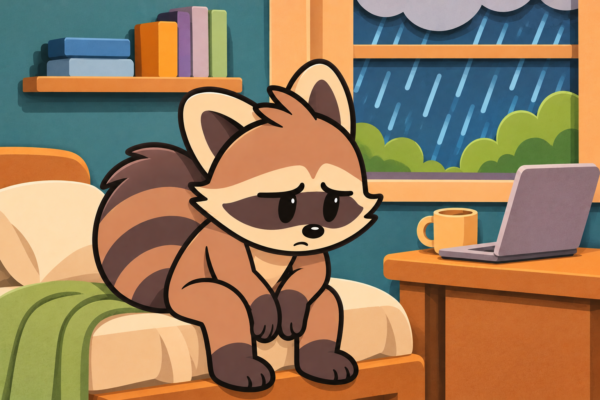
Sometimes I wonder how many times a person can disappoint themselves before it starts affecting their mental health.
You forget something important.
Make another mistake.
React emotionally to something that probably didn’t deserve that much attention.
Feel guilty because you weren’t productive enough.
And eventually, all those little things start adding up.
I’ve experienced that with ADHD. It’s rarely one enormous event. It’s a bunch of little disappointments that accumulate until I start feeling emotionally exhausted.
So, can ADHD cause depression? Yes. ADHD can contribute to depression, and people with ADHD are more likely to experience depression than people without it.
But what interests me isn’t just the connection between the two conditions.
It’s how living with ADHD can gradually change the way you feel about yourself.
And how understanding what’s happening doesn’t necessarily make those feelings disappear.
When Little ADHD Disappointments Start Adding Up
I don’t think people always realize how much emotional baggage can come with ordinary ADHD difficulties.
Someone asks me to do something.
I hear them. I understand. I fully intend to do it.
Then something else happens, and the original request slips my mind.
When I realize I’ve forgotten, I feel terrible. Especially when someone was counting on me.
Now I’ve disappointed them, and I feel like a preschooler who can’t follow simple instructions.
That’s genuinely how embarrassing it can feel.
And when those mistakes happen repeatedly, the thoughts start getting uglier.
I’m 42 years old. Why am I still struggling with this?
Why can’t I get my shit together?
Everyone else seems to handle life better than I do.
Then there are the emotional reactions.
Sometimes something feels unfair, and I get so passionate about it that I go further than I should.
Afterward, I’m left dealing with the frustration, regret, and possibility that I’ve damaged a friendship.
Other times, someone talks to me differently.
Maybe they’re tired. Maybe they’re distracted. Maybe it has absolutely nothing to do with me.
But my mind goes straight to:
Oh, great. Now they hate me.
Sometimes I wonder whether people genuinely enjoy being around me or just tolerate me.
And then there’s productivity guilt.
If I’m not doing anything productive, I start feeling like a lazy piece of shit.
But even when I accomplish something, it doesn’t always feel like enough.
So apparently, I can feel guilty for doing nothing and disappointed for doing something.
Excellent system.
None of these experiences necessarily causes depression on its own.
But when the disappointments keep accumulating, they can start affecting how you see yourself.
What Those Depressive Periods Feel Like for Me
When everything starts catching up with me, I notice changes in my behavior.
I become quieter and more irritable.
I avoid conversations and withdraw from people.
I don’t necessarily pretend everything is fine. But I do mask what I’m going through and try to keep myself together so nobody else knows how I’m feeling.
Sometimes I genuinely lose interest in things I normally enjoy.
Other times, I still want to enjoy them, but I can’t bring myself to bother.
Sometimes it’s both.
And the frustrating part?
I know what’s happening.
I recognize the sadness. I recognize the self-criticism. I know I’m probably being harder on myself than I should be.
But I can’t just decide to stop feeling miserable.
Sometimes I criticize myself for that, too.
Now I’m frustrated about the things that made me feel depressed, and I’m frustrated because I can’t shake the sadness.
Eventually, the intensity usually fades.
There’s no particular moment when everything suddenly becomes better. It happens gradually, until one day I realize I’m feeling more like myself again.
I’m more social. Things don’t bother me as intensely.
But the thoughts I have about myself haven’t necessarily changed.
They’re just not affecting me as much.
Why ADHD Can Contribute to Depression
ADHD can create repeated difficulties with responsibilities, relationships, emotional regulation, and everyday life.
Those difficulties can have emotional consequences.
Researchers sometimes use the term demoralization to describe the discouragement and feelings of failure that can develop after repeated struggles.
That makes sense to me.
There’s a difference between thinking:
I forgot something important.
And thinking:
I’m a grown adult who can’t even remember simple instructions.
One describes what happened.
The other turns the mistake into a judgment about who you are.
Over time, that kind of self-criticism can contribute to emotional distress.
But ADHD-related struggles aren’t the only explanation. ADHD and depression can also share genetic and biological risk factors, meaning someone can develop both conditions without one being entirely responsible for the other.
And when both are present, they can make everyday life particularly difficult.
ADHD makes responsibilities harder to manage.
Depression can make finding the energy or interest to handle those responsibilities harder.
Then the unfinished responsibilities create more stress.
Wonderful.
Understanding ADHD Doesn’t Automatically Make You Feel Better
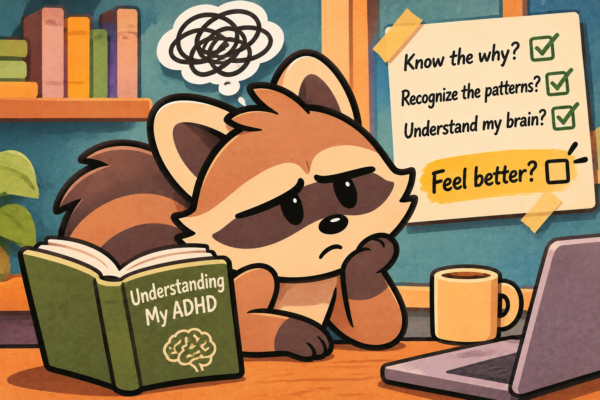
This is probably the part I find most frustrating.
I’ve spent a lot of time learning about ADHD.
I understand working memory difficulties.
I understand emotional dysregulation.
I recognize when I’m putting too much pressure on myself.
I can even identify situations where I’m probably interpreting someone’s behavior more negatively than I should.
And yet, I can still feel terrible.
Think about anger.
You can recognize that you’re overreacting.
You can know the situation doesn’t deserve that much attention.
You can tell yourself to let it go.
And still be pissed.
The same thing happens with sadness.
I can understand that forgetting something doesn’t automatically make me incompetent.
But understanding that doesn’t erase the disappointment.
Knowing why something happens and knowing how to manage it are two different things.
Learning about ADHD has helped me understand myself.
It just hasn’t given me complete control over how I feel.
Is It ADHD-Related Sadness or Clinical Depression?
Feeling depressed and having major depressive disorder aren’t necessarily the same thing.
Sometimes sadness follows a particular situation and gradually becomes less intense.
Clinical depression can involve persistent sadness, hopelessness, or loss of interest in activities, along with other symptoms that interfere with daily life.
According to the National Institute of Mental Health, major depression generally involves symptoms lasting at least two weeks.
Those symptoms can include changes in sleep, appetite, energy, concentration, and feelings of self-worth.
And depression doesn’t necessarily mean someone stops functioning.
You can still go to work, handle responsibilities, and interact with people while feeling miserable internally.
That’s why recurring or persistent depressive feelings are worth discussing with a healthcare professional.
ADHD and depression can occur together, and each may need its own treatment.
What Actually Helps?
I wish I could tell you I’ve figured this part out.
I haven’t.
Nothing I’ve tried has consistently made these feelings disappear.
For me, the biggest factor has usually been time.
When I’m going through one of those periods, I remind myself:
It’s gonna go away. You just have to wait it out.
And usually, the intensity gradually decreases.
But there are also things worth addressing beyond the sadness itself.
Reduce preventable ADHD problems. If forgetting responsibilities repeatedly leaves you frustrated, use reminders, write things down immediately, or automate recurring payments. Fewer preventable problems can mean fewer opportunities to disappoint yourself.
Pay attention to self-criticism. There’s a difference between acknowledging a mistake and deciding you’re a failure because of it. Cognitive behavioral therapy (CBT) can help people recognize and challenge negative thought patterns without pretending their mistakes don’t matter.
Notice patterns in your mood. Pay attention to how long the feelings last, whether you’re withdrawing from people, and whether you’ve lost interest in things you normally enjoy. A few notes can help you recognize patterns and explain them to a healthcare professional.
Consider treatment for depression itself. Managing ADHD may reduce some of the stress contributing to depressive symptoms, but depression can also require psychotherapy, medication, or both.
You don’t need to wait until you can no longer function to ask for help.
Why Taking Depression Seriously Matters
Research has linked ADHD with an increased risk of suicidal thoughts, suicide attempts, and death by suicide.
That doesn’t mean these outcomes are inevitable. It means the emotional consequences associated with ADHD deserve attention.
Depression, impulsivity, other mental health conditions, and life circumstances can all contribute to suicide risk.
If you’re experiencing suicidal thoughts, support is available. In the United States, call or text 988 to reach the Suicide & Crisis Lifeline. Outside the United States, Find A Helpline can help you locate services in your country.
Final Thoughts
I think one of the hardest parts of living with ADHD is recognizing what’s happening and still struggling with it.
I know I have working memory difficulties.
I know I can react too emotionally.
I know I sometimes put enormous pressure on myself.
And I know that constantly criticizing myself doesn’t make any of those things easier.
But knowing all that doesn’t automatically change how I feel.
Sometimes the little disappointments accumulate until I’m mentally exhausted.
I become quieter, withdraw from people, and try to keep myself together without letting everyone know what’s happening internally.
Eventually, the sadness usually fades.
But the underlying struggles don’t necessarily disappear with it.
Learning about ADHD has helped me understand a lot about myself.
Awareness is useful. It just isn’t the same as relief.