
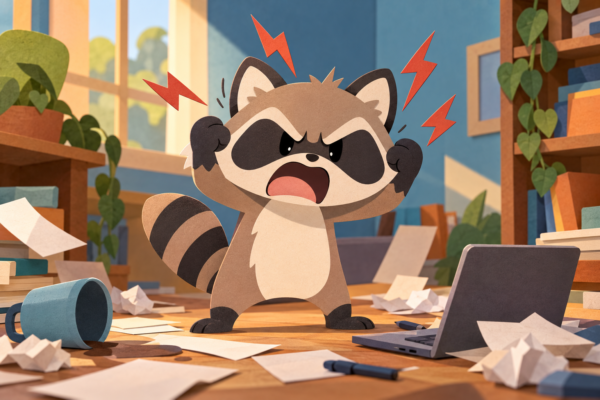
For a long time, I thought I just had an anger problem.
Actually, anger is what first sent me to therapy back in 2009.
At the time, I didn’t know anything about a possible connection between anger and ADHD. I just knew I could get really fucking angry.
I’d explode. I’d say horrible things. Then eventually I’d calm down and have to deal with whatever happened while I was angry.
And afterward?
I’d feel embarrassed and guilty for not being able to control myself.
When I first went to therapy, I was diagnosed with depression. As I continued going, I started understanding how my childhood trauma had contributed to my depression and anger.
That helped me tremendously.
But understanding where my anger came from didn’t mean I suddenly knew how to handle it.
Sometimes I’d keep quiet when something bothered me because I didn’t want an argument. I’d hold back what I really wanted to say.
And I’d keep holding it in.
Until eventually, I’d explode anyway.
Years later, after being diagnosed with ADHD, I started understanding something else I wish I’d known back then:
ADHD can make it harder to manage strong emotions, including anger.
It’s often called emotional dysregulation, which basically means having trouble managing how intensely you react to something or how you respond to that feeling.
And suddenly some of those reactions made a lot more sense.
Not because ADHD gave me an excuse for them.
Because for the first time, I had another piece of the explanation for why an emotion could go from manageable to WHY THE FUCK AM I THIS ANGRY? so quickly.
Can ADHD Cause Anger?
Yes. ADHD can contribute to anger problems because difficulty regulating emotions is common in adults with ADHD.
That doesn’t mean ADHD automatically makes someone angry.
It means that when frustration or anger shows up, managing the intensity of that emotion and how you respond to it can be harder.
Research has found that adults with ADHD often experience difficulties with emotional regulation, including anger, irritability, and frustration.
A review published in the American Journal of Psychiatry, Emotional Dysregulation and Attention-Deficit/Hyperactivity Disorder, explains this connection.
In normal human language?
Sometimes the emotion hits hard and fast, and controlling what happens next can be difficult.
That’s the part I recognize.
I don’t walk around angry all day.
It’s more like my frustration has a threshold.
Something doesn’t work.
Fine.
I try again.
It still doesn’t work.
Okay…
Again.
Still doesn’t work.
And then suddenly:
FUUUUUCK.
The weird part is how quickly I can cross that line.
Sometimes even I’m thinking:
Why am I THIS pissed off?
Five minutes ago I was fine.
What ADHD Anger Feels Like for Me
I think this is the part that’s difficult to explain to someone who isn’t experiencing it.
The anger feels completely justified while I’m angry.
I’m not standing there calmly evaluating the situation and thinking:
You know what? A level-eight emotional response seems appropriate here.
I’m just pissed off.
The rational part usually comes later.
And depending on how angry I am, what comes out can look different.
Raised voice.
Sarcasm.
Swearing.
Walking away.
Going completely quiet.
Sometimes I catch myself before any of that happens and think:
This isn’t even worth the argument.
I’m much better at doing that now.
But that doesn’t mean the anger wasn’t there.
And when I don’t catch myself?
That’s when the embarrassment and guilt show up afterward.
Because once I’ve calmed down, I can recognize that I didn’t handle things the way I should have.
Even if something genuinely bothered me, that doesn’t mean my reaction was okay.
And feeling guilty doesn’t undo what happened.
That’s something I’ve had to learn:
Feeling the emotion and acting on the emotion are two different things.
I can’t always control how quickly anger shows up.
I have a lot more control over what I do once it’s there.
That took me years to understand.
Why Can Anger Feel So Intense With ADHD?
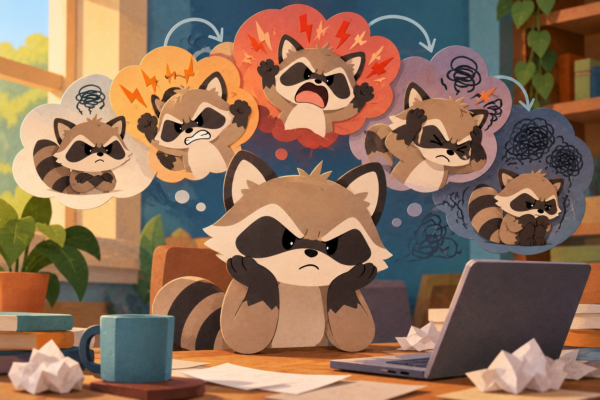
The explanation that makes the most sense to me isn’t that ADHD creates anger out of nowhere.
It’s that ADHD can affect emotional regulation.
Think about how difficult it can be to manage attention and impulses when you have ADHD.
Emotions can be difficult to manage, too.
And when frustration hits, the problem isn’t necessarily that you’re feeling frustrated.
Everybody gets frustrated.
The difficulty can be managing how intense that frustration becomes and how you respond to it.
That’s why I don’t really like thinking of it as:
ADHD makes me angry.
For me, it’s closer to:
When I get angry, sometimes my brain has a harder time pumping the brakes.
But ADHD wasn’t the only thing I needed to understand about my anger.
I’d already spent years in therapy learning how depression and childhood trauma had affected me.
Understanding ADHD didn’t erase any of that. It gave me another way to understand why certain emotional reactions could be so difficult to control.
I wish I’d known that when I was younger.
Sometimes My Anger Starts With Something Else
I remember one Saturday when I had my entire day planned out.
I needed to go to the dealership, wanted to hit the gym, and had a barbershop appointment later that day.
Everything was supposed to fit.
Except the dealership took longer than I expected.
And I started getting pissed off.
Because now I’m thinking:
Great. My whole fucking day is ruined.
I had to be at the barbershop at a certain time, which meant every extra minute at the dealership was cutting into my gym time.
And that put me in a bad mood.
I still went to the gym, though.
I figured I was already out. What was I going to do? Drive all the way home just to turn around and go to the barbershop?
So I went for whatever time I had left.
But the workout wasn’t hittin.
It wasn’t the workout I wanted.
Now my gym session felt ruined, too.
And here’s the frustrating part.
I knew being angry wasn’t going to give me that time back.
But that didn’t mean I could just stop being angry.
I’ve written about my struggles with ADHD time blindness and how difficult managing time can be.
I’ve also written about ADHD emotional dysregulation and how difficult it can be to calm down once I’m upset.
Looking back, I can see how those difficulties might overlap.
I had a plan for my day.
Something took longer than expected.
I got frustrated because I was losing time I wanted to spend doing something else.
And even when I tried to make the best of the situation, I couldn’t shake the frustration.
Sometimes it’s not just how quickly I get angry. It’s how long I stay angry after something goes wrong.
And that’s how one frustrating errand can end up affecting the rest of my day.
What Has Actually Helped Me With My Anger
I wish I had some magic trick here.
I don’t.
The biggest thing that helped me was therapy.
Remember, anger is literally why I started going.
But I didn’t learn some special technique that suddenly made me stop getting angry.
Therapy helped me understand myself. I began recognizing how my childhood experiences and depression were connected to my anger.
That understanding helped me calm myself down more often.
But I still had a problem.
I’d keep quiet when something bothered me because I didn’t want an argument.
I’d hold back what I wanted to say.
And eventually, everything I’d been holding in would come out.
Sometimes in a much worse way than if I’d addressed the problem earlier.
Keeping quiet wasn’t always the same thing as managing my anger.
That’s something I understand better now.
Walking Away Before I Make Things Worse
One thing that genuinely helps me is walking away when I’m getting too angry.
Does it immediately make me calm?
No.
It helps a little.
But more than anything, it stops me from making the situation worse.
Because when I’m really angry, I’m probably not going to suddenly become the most reasonable version of myself because somebody tells me to calm down.
If anything, telling me to calm down might unlock a bonus level.
What I’ve gotten better at is noticing:
I’m getting really pissed off.
And then sometimes:
Don’t.
Don’t say it.
Walk away.
This isn’t worth the argument.
I don’t always succeed.
But I’m a hell of a lot better at it than I used to be.
And there’s an important difference between walking away and keeping everything bottled up.
Walking away gives me a chance to come back to the problem when I’m calmer.
Keeping everything inside just means the problem is still sitting there.
One of the most useful things I’ve learned is that I don’t have to solve the problem while I’m at peak anger.
I can stop talking.
I can walk away.
I can come back to the conversation.
I can let my brain come down before deciding what actually needs to be said.
Because I can come back to a conversation.
I can’t pull words back into my mouth.
What Can You Do About ADHD Anger?
If any of this sounds familiar, I’d start by paying attention to your own patterns.
Not because noticing a trigger magically makes the anger disappear.
It doesn’t.
But it’s much easier to interrupt something when you start recognizing the road you’re already on.
Ask yourself:
- What usually happens right before I get really angry?
- Am I frustrated, overwhelmed, or feeling interrupted?
- Am I holding something in because I don’t want an argument?
- Do I notice any physical warning signs before I explode?
- What tends to make the situation worse?
And here’s something else worth asking:
Am I actually calming down, or am I just keeping everything inside until I can’t anymore?
Because those aren’t necessarily the same thing.
Give Yourself Permission to Deal With It Later
For me, one of the biggest changes has been learning that sometimes the smartest thing I can do while angry is nothing yet.
Don’t solve it yet.
Don’t send the text yet.
Don’t prove the point yet.
Don’t keep arguing just because my brain desperately wants the final word.
If you’re getting too angry to have a productive conversation, it’s okay to stop and tell the other person you need some time.
Give the emotion a chance to come down.
Then come back and deal with whatever actually happened.
That last part matters.
Walking away shouldn’t mean avoiding the problem forever.
Sometimes the conversation still needs to happen.
It just doesn’t need to happen while you’re furious.
Get Help if Anger Is Affecting Your Life
If anger is regularly damaging your relationships, affecting your job, making you feel out of control, or causing you to say or do things you regret, consider talking to a mental health professional.
I did.
Therapy helped me understand my depression, my childhood experiences, and how they contributed to my anger.
Later, understanding ADHD helped me recognize that difficulty regulating emotions might also be part of what I was experiencing.
If I were starting over today, I’d want both pieces:
Help managing the anger and an understanding of what might be contributing to it.
For readers looking into ADHD treatment, the National Institute of Mental Health explains treatment options for adults, including medication and psychotherapy.
Does ADHD Explain My Anger?
I think ADHD explains part of it.
And that’s an important distinction.
I don’t look backward now and blame every horrible thing I’ve ever said on ADHD.
Sometimes I was wrong.
Sometimes I handled things badly.
Sometimes I was just fucking angry.
And sometimes I kept things to myself for so long that when I finally said something, it came out much worse than it needed to.
Learning about ADHD didn’t erase what I’d learned in therapy.
It added another piece.
For years, the explanation I had was basically:
I have an anger problem.
Therapy helped me understand that my depression and childhood experiences played a role.
And years later, ADHD helped me understand something else.
The speed.
The intensity.
That moment where frustration suddenly becomes much bigger than I expected it to become.
I wish I’d known that earlier.
Not because it would’ve excused anything I did.
Because maybe instead of only thinking:
Why the fuck am I like this?
I could’ve started asking:
Okay. This is happening. What can I do about it?
That’s a much more useful question.
And after years of working on my anger, that’s probably the biggest thing I can tell someone else dealing with it:
You may not always get to decide when the anger shows up.
But you can get better at deciding what happens next.